
Michael Kovnick
The first thing you notice, if you’re paying attention, is that nobody seems to be in a hurry.
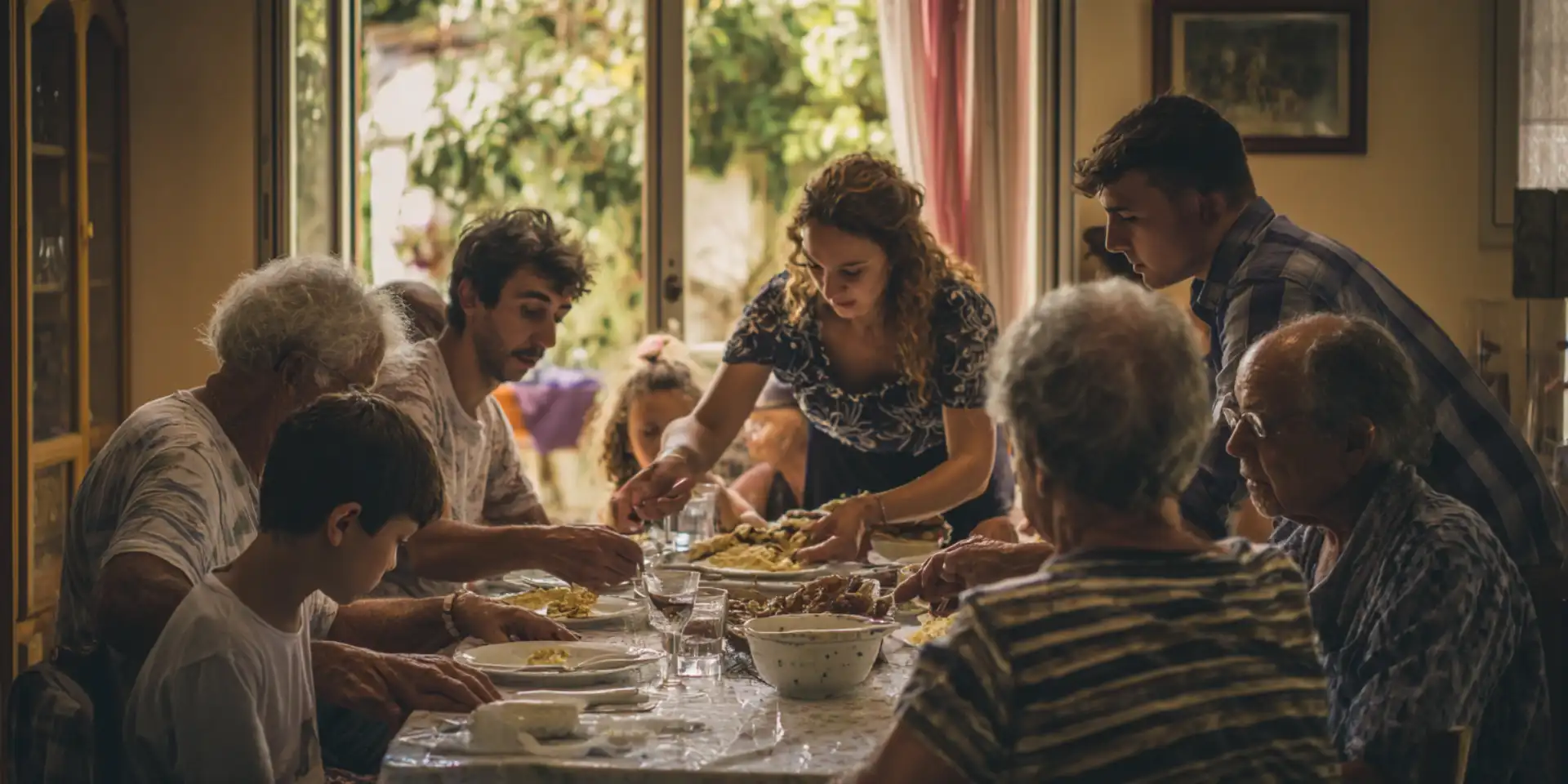
I’m sitting at a table in a farmhouse outside Montepulciano, watching a family I’ve known for fifteen years serve lunch. The grandmother moves between the kitchen and the dining room with a rhythm that suggests she’s done this ten thousand times. Which she has. The pasta comes out when the pasta is ready, not when someone checks a clock.
There are eight of us at the table. Three generations. The youngest is seven, the oldest is eighty-two. And for the next three hours, nobody will look at a phone. Nobody will excuse themselves early. The meal will proceed through its courses with a pacing that feels almost ceremonial, though nobody here would use that word.
This is just lunch.
The Architecture of an Italian Meal
To understand how Italians eat together, you have to stop thinking about meals as events and start thinking about them as structures. A proper Italian meal has a shape. It builds, it pauses, it resolves. And within that structure, there are signals that most visitors never learn to read. The Mediterranean diet, recognized by UNESCO as Intangible Cultural Heritage, encompasses not just the food itself but these social practices that surround it.
The first signal is the antipasto. In a home setting, this is often simple - some salumi, maybe bruschetta, olives. But the antipasto serves a purpose beyond food. It’s the decompression period. You’ve just arrived. You’ve just sat down. The antipasto gives everyone permission to settle in, to start talking, to stop being wherever they were before.
I’ve watched tourists at agriturismi attack the antipasto like it’s the main event, loading their plates, eating quickly. And then they’re full before the primo even arrives. They’ve misread the structure. The antipasto is a warm-up, not a sprint.
Then comes the primo - usually pasta, sometimes risotto or soup. This is the emotional center of the meal. It’s often when the conversation deepens, when someone tells a story from the week, when the rhythm of the table establishes itself.
And here’s something subtle that took me years to notice: the primo is almost never served in individual portions at family tables. It comes in a large bowl, passed around. You serve yourself. This isn’t about convenience. It’s about participation. When you take pasta from a shared bowl, you’re joining something. You’re not just receiving food; you’re engaging with the collective act of eating together.
What the Silence Actually Means
There’s a moment, usually just after the secondo arrives, when the table goes quiet. Not awkward quiet. Focused quiet. Everyone is eating. The conversation has paused.
The first few times I experienced this, I felt compelled to fill it. I’d ask a question, make a comment, try to keep things moving. And I’d notice, subtly, that I was the only one talking.
I eventually realized that the silence isn’t a gap to be filled. It’s part of the meal. It’s the moment when everyone is present with the food, tasting it, experiencing it together without needing to narrate the experience. Italians don’t feel obligated to perform appreciation. They just eat.
This is hard for visitors, especially Americans. We’re trained to comment on food, to praise it vocally, to fill any silence with affirmation. But Italian meal culture assumes the food speaks for itself. If you’re eating with obvious enjoyment, that’s sufficient. The cook knows.
After the quiet moment passes, conversation resumes. But it’s different now. More relaxed. The serious eating is done. The table moves into a looser phase.
The Coffee That Means It’s Over (And the One That Doesn’t)
If you want to know when an Italian meal is ending, watch for the coffee.
But be careful. There are two kinds of coffee moments, and confusing them will leave you stranded.
The first kind is the caffè that comes after the dolce, after the fruit, after everything else. This coffee is a signal. It says: we’re winding down. The meal is entering its final phase. But - and this is important - it doesn’t mean stand up and leave. Not yet.
The second kind is the digestivo. This might be amaro, or limoncello, or grappa. It might be offered alongside the coffee or after. The digestivo is the actual conclusion. When the digestivo appears, and is finished, and the conversation has naturally paused… then you can think about leaving.
Here’s what happens when visitors get this wrong: they drink their coffee, assume the meal is over, and stand up. The host is confused. The table is confused. The meal wasn’t finished. It was just transitioning.
I’ve made this mistake. I’ve stood up too early and felt the subtle shift in the room - not offense exactly, but a kind of social misalignment. The meal had a shape, and I’d ignored it.
The Sunday Lunch Principle
Sunday lunch is where all of this becomes most visible. It’s also where the gap between Italian meal culture and the patterns many visitors bring with them becomes most stark.
A typical Sunday lunch in a Tuscan family starts arriving around 1:00 PM. That’s when people appear, when the first glasses of wine are poured, when the antipasto materializes. The actual sitting down might not happen until 1:30 or later.
From there, the meal unfolds. Primo. Secondo with contorni. A pause. Dolce. Fruit. Coffee. Digestivo. Conversation that wanders through family news, local politics, someone’s health, someone’s job, a story from thirty years ago that everyone’s heard before but that gets told anyway.
By the time people start leaving, it’s often 4:00 or 5:00 PM. Sometimes later.
Visitors who expect a one-hour lunch are bewildered by this. I’ve seen guests at agriturismi visibly fidgeting by hour two, clearly wondering when they can politely escape. But escaping isn’t the point. The lunch is the point. It’s the main event of the day. Everything else is organized around it.
This is, I think, the fundamental misunderstanding that most travelers bring to Italian food culture. They think of meals as interruptions - necessary pauses in the real activities of the day. Italians think of meals as the activities themselves. The sightseeing, the walking, the exploring… those are what happen between meals. Research from the Italian Academy of Cuisine (Accademia Italiana della Cucina) documents how regional meal traditions vary across Italy while maintaining this core principle of the table as social center.
Reading the Serving Signals
Italian hosts communicate through serving patterns, and learning to read them will save you from several common embarrassments.
When a host offers you more food, the first offer is genuine but deniable. You can say no. When they offer a second time, you should probably say yes. When they offer a third time, with a certain insistence, saying no starts to feel like rejection.
But - and I’ve learned this slowly - taking too much the first time is also wrong. You should take a moderate portion, eat it, wait. If you’re still hungry, you’ll be offered more. This system assumes patience. It assumes the meal will continue. It assumes there’s no need to front-load your eating.
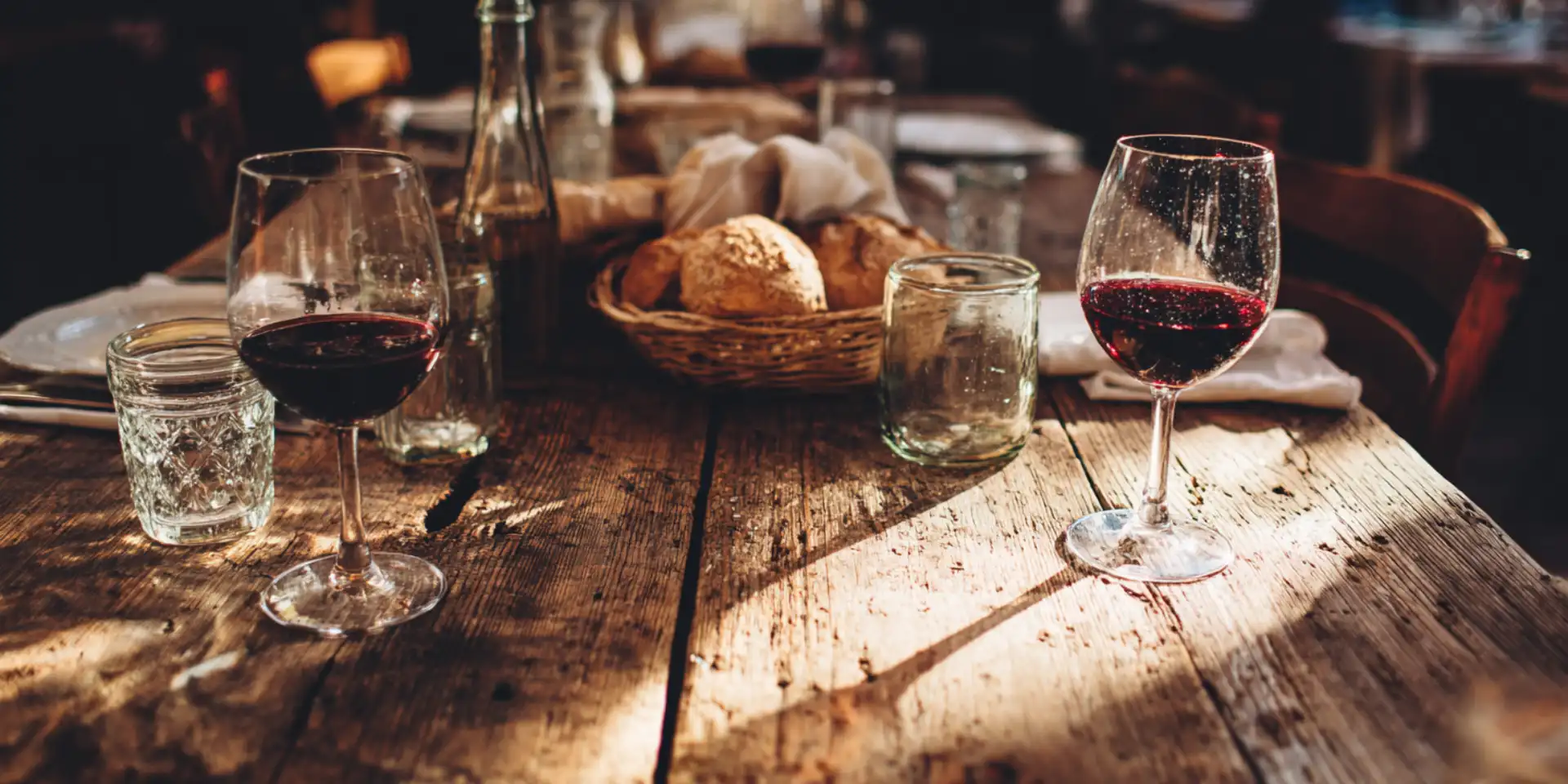
The bread basket works differently. Bread is never offered - it’s just there. But bread serves specific purposes. It’s for pushing food onto your fork. It’s for soaking up sauce at the end of a dish (the scarpetta, though you should watch to see if your hosts do this before you do). It’s not for eating on its own before the food arrives. Filling up on bread before the primo is the mark of someone who doesn’t understand what’s coming.
The Children’s Place at the Table
In many cultures, children eat separately, or eat quickly, or are excused early. Italian table culture includes children differently.
At the Montepulciano table, the seven-year-old has her own place setting. She’s served the same food as everyone else - not a simplified kid’s version, but the actual meal. She’s expected to sit through the courses, to participate in conversation when spoken to, to learn the rhythm of the table.
She gets restless sometimes. She whispers to her mother. She plays with her food a bit. But she stays. And by the time coffee comes, she’s absorbed something about how meals work, about time, about the family as a collective rather than a collection of individuals.
I’ve watched this pattern repeat across dozens of Italian families over the years. Children aren’t separated from meal culture; they’re initiated into it. And by the time they’re teenagers, they know how to hold a table - how to pace themselves, how to contribute to conversation, how to stay present for three hours without needing external entertainment. Studies published in the Journal of Family Psychology have consistently found that shared family meals correlate with better outcomes for children - and the Italian model demonstrates what that practice looks like when elevated to an art form.
When the Table Is the Event
Here’s what I think visitors miss most often: the Italian meal isn’t a delivery mechanism for food. It’s not a social obligation to be endured. It’s not a break between activities. The table itself is the event.
The conversation that happens at an Italian table isn’t small talk. It’s the actual texture of family life. News is shared. Decisions are made. Arguments happen and resolve. Memories are passed down. The meal creates a container for all of this - a recurring structure that holds the family together across time.
I’ve sat at tables where a grandmother told a story about her mother, who I obviously never met, and watched her grandchildren absorb something about their own history. I’ve watched cousins reconnect after months apart, using the meal as the occasion for connection. I’ve seen difficult topics approached carefully, with the shared food creating a kind of neutral ground.
Some operators have built their entire approach around this understanding. Culture Discovery Vacations, for instance, structures their small-group trips to include extended meals with local families - not as a tourist attraction, but as an actual participation in how daily life works. It’s not the only way to access this, but it demonstrates what becomes possible when you stop treating meals as logistics and start treating them as the experience itself.
The Pace You Carry With You
The hardest part, for visitors, isn’t learning the rules. It’s adjusting your internal clock.
Most travelers arrive in Italy with a pace built for efficiency. They want to see things, do things, cover ground. Meals become obstacles - necessary stops that take time away from the real activities.
But Italian meal culture asks you to reverse this. The meal is the activity. The sights are what you do to fill time between meals. And when you make this shift - when you stop treating lunch as a pit stop and start treating it as the destination - something changes in how you experience the country. This philosophy is precisely what Slow Food International, the movement that began in Italy in 1986, has spent decades articulating and defending against the encroachment of fast-food culture.
You stop checking your watch. You stop calculating how much time this is “taking.” You start to notice the texture of the table - the worn wood, the mismatched chairs, the way light comes through the window in late afternoon. You start to hear the conversation differently, not as background noise but as the point.
This is, I suspect, why so many visitors to Italy feel like they “almost” understood something but couldn’t quite grasp it. They glimpsed the rhythm but couldn’t join it. They stayed observers when the table was inviting them to participate.
A Practice to Try
If you find yourself at an Italian table - a real one, not a restaurant table but a family table, or a table at a small agriturismo where the owners eat with you - try this.
Don’t plan what comes after.
Don’t book a museum visit for later that afternoon. Don’t set an alarm. Don’t create a reason to leave. Just let the meal take as long as it takes.
Watch when food appears. Notice when conversation pauses and resumes. Pay attention to when coffee comes, and what happens after. Let yourself be absorbed by the rhythm instead of fighting against it.
You might find that three hours pass and you’re not bored. You might discover that the meal itself was more memorable than any monument you’d planned to visit. You might realize that you’ve been approaching Italian culture as a spectator when you could have been approaching it as a participant.
The table is always there, offering an invitation. The only question is whether you’re patient enough to accept it.