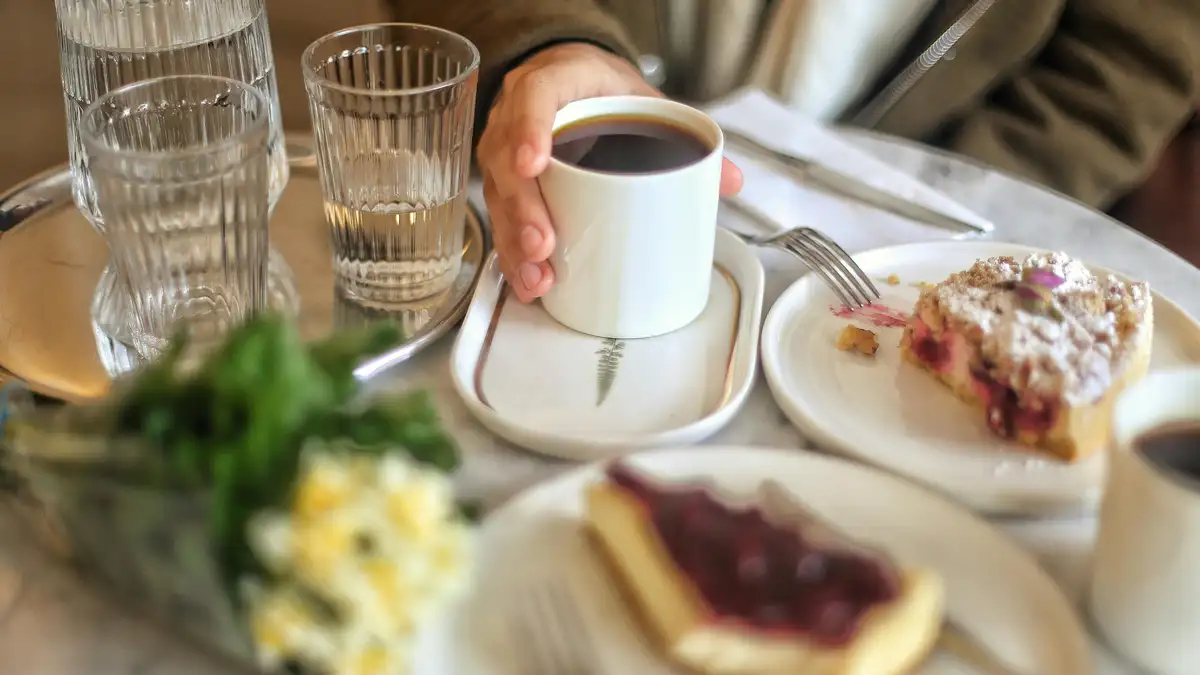

There's a moment that happens every single day in Swedish offices, homes, and cafes around 10am. Someone puts the kettle on. Someone else pulls out a tin of cardamom buns. Chairs scrape back from desks, laptops close, and for the next twenty or thirty minutes, work simply... stops. This is fika, and if you think it's just a coffee break, you've already missed the point.
Fika (pronounced "fee-kah") is genuinely difficult to translate into English - not because the word is complicated, but because the concept doesn't have an equivalent in most other cultures. It's a verb and a noun. You can "have a fika" or you can "fika" with someone. What it always involves, though, is coffee or tea, something sweet to eat, and the deliberate act of slowing down with other people. The coffee is secondary, honestly. The connection is the thing.
Where Fika Came From
Coffee arrived in Sweden in the 17th century, but it took a while to catch on. King Gustav III famously tried to ban it twice, convinced it was dangerous. He lost that argument badly. By the 1800s, Sweden had become one of the most coffee-obsessed countries in Europe, and that reputation has never faded. Today, Sweden consistently ranks in the top five countries globally for per-capita coffee consumption.
The word "fika" itself is thought to come from a 19th-century slang reversal of "kaffi" (an older Swedish word for coffee) - syllables swapped around in the playful way languages sometimes evolve. By the early 20th century, it had taken on its current meaning: a break centered on coffee and community. Swedish labor movements in the early 1900s helped cement fika as a workplace right, not a privilege. Workers pushed for scheduled breaks, and fika became the ritual that filled them.
What Actually Happens During Fika
Picture this: it's 10:15am at a mid-sized architecture firm in Gothenburg. The senior designer stands up and says "fika?" - just that one word - and within minutes, eight people have gathered around a table in the small kitchen. Someone brought kanelbullar from a bakery on Linnégatan. Someone else remembered that a colleague doesn't eat gluten, so there's also fruit. The conversation drifts from a project deadline to someone's weekend cabin trip to a mild argument about whether the new tram route is worth the hype.
Nobody checks their phone. Nobody "circles back" to work topics. The whole thing lasts about 25 minutes, and then, quietly, people drift back to their desks.
That's fika. Deceptively simple.
Swedish workplaces typically have two fika breaks per day - one mid-morning, one mid-afternoon around 3pm. Some workplaces are strict about the schedule, others more fluid, but the expectation that fika will happen is near-universal. Skipping it, especially when you're new to a team, sends a signal you probably don't want to send. It says: I'm not interested in you people.
The Food: Don't Show Up Empty-Handed
Here's where it gets specific. Fika without something sweet is technically possible, but it's a little sad, and Swedes know it.
Kanelbullar - cinnamon buns - are the icon. The Swedish version is different from what you'd find at an airport Cinnabon: less sweet, more cardamom-forward, often twisted into a knot shape rather than rolled into a spiral. October 4th is officially "Kanelbullens Dag" (Cinnamon Bun Day) in Sweden, and bakeries across Stockholm and beyond treat it with genuine reverence. A good kanelbulle from Vete-Katten in Stockholm, which has been operating since 1928, is worth going slightly out of your way for.
Cardamom buns (kardemummabullar) have surged in popularity over the past decade and now rival their cinnamon counterparts in many cafes. They're fragrant and a shade less sweet, with a flavor that pairs almost eerily well with a dark roast.
Other fika staples worth knowing:
- Kladdkaka - a dense, gooey Swedish chocolate cake that's left intentionally underbaked in the center. One bite and you'll immediately understand why it exists.
- Prinsesstårta - a dome-shaped cake covered in green marzipan, filled with cream and jam. More of a special-occasion contribution, but not unheard of on a Friday.
- Pepparkakor - thin ginger snaps that appear in December but that plenty of people eat year-round without apology.
The unspoken rule: if you're hosting, you bring something. Showing up to a colleague's fika with a bag from the nearest konditori (pastry shop) is one of the quickest ways to be liked in Sweden. Not a bribe, just participation.
The Etiquette of the Invitation
Here's something that surprises a lot of visitors. Fika invitations in Sweden are meant to be inclusive by default. If you're inviting colleagues and you leave someone out, you've done something socially awkward. The Swedish concept of "Jantelagen" - a cultural norm that discourages putting yourself above others or excluding people from group experiences - shapes fika invitations in subtle but real ways.
"Shall we fika?" is open. "Do you want to fika?" directed at one person while others can hear is slightly odd unless there's an obvious reason - catching up with an old friend, having a private conversation. In a workplace setting, the invitation almost always implies the whole group.
At home, fika is a way of saying "you matter enough to sit down with." Swedes aren't known for casual, unplanned socializing in the way some other cultures are - you don't just drop by without notice. But if someone invites you to fika at their home, that's meaningful. They've thought about you, prepared something, and want your company. And honestly, that's the whole point.
Fika in the Workplace: More Than a Break
Swedish workplaces have a different relationship with productivity than many other countries do. Sweden trialled a six-hour workday at Svartedalens retirement home in Gothenburg back in 2015, and the resulting data was fascinating - staff reported better wellbeing, and patients received more engaged care. The underlying idea is one that fika embodies perfectly: rest and connection aren't opposed to good work. They're part of it.
Many Swedish managers protect fika time because they understand what it actually does. It's where junior employees learn how the office really works. It's where tension between colleagues gets softened before it becomes a proper conflict. It's where people find out that someone's going through something hard and quietly adjust their expectations accordingly.
Can a coffee break do all that? In Sweden, yes. Because it's not just coffee.
If you're wondering whether to join fika when you're clearly behind on a deadline... join fika. Declining repeatedly marks you as either rude or struggling, and neither is a good look. The Swedish approach is to trust that 25 minutes away from the screen will make the remaining hours more focused, and the research - including work by behavioral economists at Stockholm University - tends to back that up.
Fika at Home: The Slower Version
Home fika runs at a different pace. It's unhurried in a way that even workplace fika isn't.
On a Saturday morning outside Uppsala, someone might put coffee on at 9am, slice a loaf of cardamom bread that's been cooling since the night before, and set out small plates. A friend comes over at 10. They sit for two hours, talking about everything and nothing. This isn't brunch, and it's not a "coffee date" in any performative sense. It's just... being together over something warm and sweet.
The Swedish concept of "lagom" - often translated as "just the right amount" - applies here too. The spread doesn't need to be elaborate. Trying too hard reads as slightly un-Swedish. A simple kanelbulle, good coffee, a quiet kitchen table. That's the ideal.
Home fika also tends to bring generations together in a way that other socializing doesn't. Grandparents, parents, small children - everyone fits. There's no alcohol, the food is approachable, and the pace accommodates people who move at their own speed. Of all the social rituals I've come across, it's one of the more genuinely egalitarian ones.
Fika in Cafes: The Third Space
Stockholm has approximately 1,000 cafes (give or take), and a good portion of them are designed for fika culture specifically. Not for quick takeaway, not for grinding through deadlines, but for sitting, talking, and staying a while.
The classic Swedish konditori - think Cafe Saturnus on Eriksbergsgatan, with its enormous, almost comically large cinnamon buns - is a fika institution. Marble counters, mismatched chairs, an atmosphere that communicates: there is no rush here. Order your coffee. Pick your pastry. Sit.
What's interesting about cafe fika is that it's a genuine "third place" - somewhere between home and work where social life actually happens. In a country where domestic space is somewhat private and dropping by unannounced is unusual, cafes fill a real gap. Meeting someone for fika at a cafe is a well-calibrated social move: warm but not intimate, committed but not overwhelming. It's the Swedish equivalent of suggesting a walk - friendly, low-pressure, easy to extend if things are going well.
The question of authenticity in cultural rituals like this is worth pausing on. When does a tradition become a performance for tourists? Worth reading what "authentic" actually means before you decide whether the Instagram-ready cinnamon bun at a hip Stockholm cafe is "real" fika or not. The answer might surprise you.
Keeping Conversations Light: The Unwritten Rules
Fika has its own conversational register. Not everything belongs there.
Heavy work discussions - project debates, performance issues, anything that requires someone to be "on" - are generally off-limits. Not because there's a formal rule, but because fika is understood to be a decompression space. Dragging work into it is a bit like checking your email during dinner with friends. You can do it, but you're breaking something.
Politics can come up, but Swedes tend to avoid strong declarations in group settings. This isn't because they lack opinions - they absolutely have them. It's more that fika isn't the place to win arguments. It's the place to maintain relationships. The Swedish preference for consensus over confrontation shapes what gets said over cardamom buns.
Personal problems do surface, but usually at an angle. A colleague might mention they're tired without explaining why. Someone else might ask a gentle follow-up question. The conversation might drift somewhere meaningful without ever becoming a formal check-in. This indirectness can frustrate people from cultures where emotional directness is the norm, but once you understand it, there's something almost elegant about it. People get looked after without being put on the spot.
What comes up naturally: weekend plans, something funny that happened, a book someone's reading, mild complaints about minor inconveniences. Fika conversation is low-stakes by design, and that's precisely what makes it easy to show up for every day.
Fika for Visitors: How to Participate Respectfully
If you're visiting Sweden - whether for a week or a year - fika is one of the easier cultural practices to join, as long as you know a few things.
Don't order drip coffee and drink it standing up while scrolling your phone. That's not fika. Sit down. Solo fika at a cafe is perfectly normal, but be present with it.
If a Swedish colleague or friend invites you to fika, accept. Even if you don't drink coffee (tea is always an option), even if you're not hungry. Accepting the invitation is the social act itself. Declining because you're "too busy" or "not a coffee person" will create distance faster than almost anything else.
And if you're ever in a position to host - maybe you're staying with a Swedish family, or working in a Swedish office for a stretch - bring something good. You don't need to bake it yourself. The local grocery store will have kanelbullar. Pick up a bag. Put them on a plate. Done.
Is there a learning curve to Swedish social customs generally? A bit. Knowing when to do guided cultural experiences versus exploring on your own matters too. This framework for DIY vs. guided tours is worth a look if you're thinking through how to structure time in Sweden or anywhere else with a strong local culture that takes some patience to access.
What Fika Says About Sweden
Every culture has rituals that, looked at closely enough, reveal something essential about what that culture values. Fika reveals quite a bit about Sweden.
For one thing, it says that time is worth protecting. The fact that fika is baked into the workday - scheduled, expected, not something you squeeze in after hours but something that happens during them - reflects a particular attitude toward people at work. You're not just a productivity unit. You need to stop, eat something, and talk to someone.
It also says that relationships are built slowly and with intention. Swedes don't typically make fast friends. The concept of "döskallar" - "skull friends," meaning people who've known you since childhood - reflects how much weight is placed on long-term connection. Fika is how those relationships get maintained across years and decades. Same table, same time, same people, thousands of cups of coffee.
And there's something about equality in it too. The CEO at a Swedish company sits down with the junior designers. The senior partner joins the interns. This isn't performative egalitarianism - it's just what you do. Everyone stops. Everyone eats. Everyone talks.
A Final Note on Why This Matters
Sweden isn't paradise. It has its own social challenges, its own forms of loneliness, its own debates about work culture and belonging. But fika is one of those rare social habits that actually seems to work - that creates connection reliably, repeatedly, cheaply, and without requiring anyone to be particularly outgoing or emotionally exposed.
Sitting down for twenty minutes with someone, over something warm and sweet, with no agenda and nowhere to be. That might be one of the most quietly radical things a person can do in a world that treats every spare minute as a chance for optimization.
Worth it. Every single time.
Comments (0)
No comments yet. Be the first!