
The smell hits you before anything else.
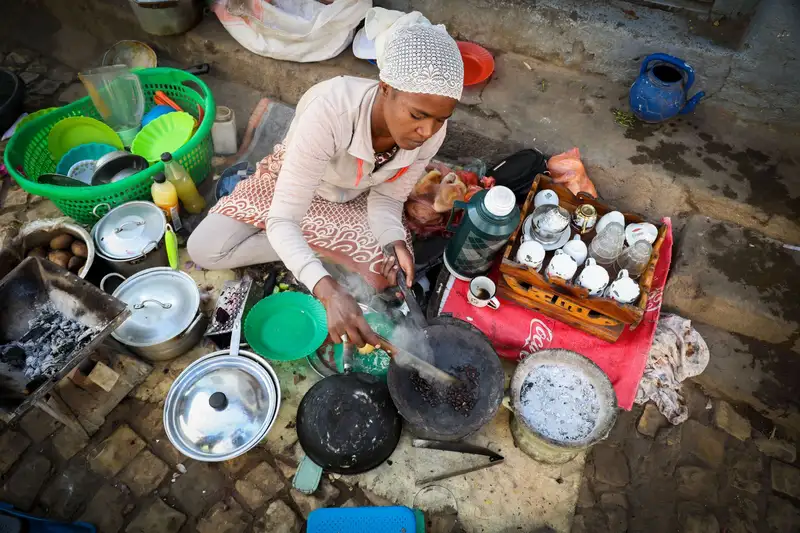
Green coffee beans roasting over a small charcoal burner, smoke curling toward the ceiling, the sharp green-grassy scent of raw coffee slowly giving way to darker, warmer tones, almost caramelized. If you're sitting in someone's home in Addis Ababa or a small village in the Sidama region, you might also notice fresh grass spread across the floor and incense burning nearby, while a woman bends over the pan with quiet, practiced concentration. Nobody is rushing. That's the first thing to understand.
The Ethiopian coffee ceremony, known as bunna maflat in Amharic, isn't a performance put on for guests. It's the social architecture of daily life. It happens multiple times a day in many households, and an invitation to sit through one is among the more authentic gestures of welcome you'll encounter anywhere in the world.
Where Coffee Actually Comes From
Ethiopia isn't just a country that drinks a lot of coffee. It's where coffee comes from. The Kaffa region in southwestern Ethiopia is widely understood to be the birthplace of Coffea arabica, and UNESCO has recognized Ethiopian coffee forest cultural landscapes in the southwest for their significance as a living gene bank for wild coffee biodiversity. The country had been growing, roasting, and drinking coffee for centuries before it ever reached Yemen, then the Ottoman Empire, then Europe.
This matters when you're sitting through a ceremony, because what you're participating in didn't borrow its significance from elsewhere. It developed here, on its own terms, over a very long time.
Ethiopians often say that coffee brings people together in a way that nothing else does: and that's not idle talk. The ceremony literally structures social time. It creates space for conversation, for checking in on neighbors, for resolving small tensions, for celebrating. In rural areas especially, skipping the ceremony when a guest arrives would be considered a real slight.
The Three Rounds
Most Westerners arrive expecting one cup. The ceremony involves three.
Each round has a name. Abol is the first, the strongest, brewed from freshly roasted and ground beans. Tona comes next, made from the same grounds with more water added. Baraka, the third, is lighter still. The word baraka means blessing in both Amharic and Arabic, and in many households, drinking all three is considered essential. Leaving after one is a bit like showing up to a dinner party, eating the appetizer, and heading for the door.
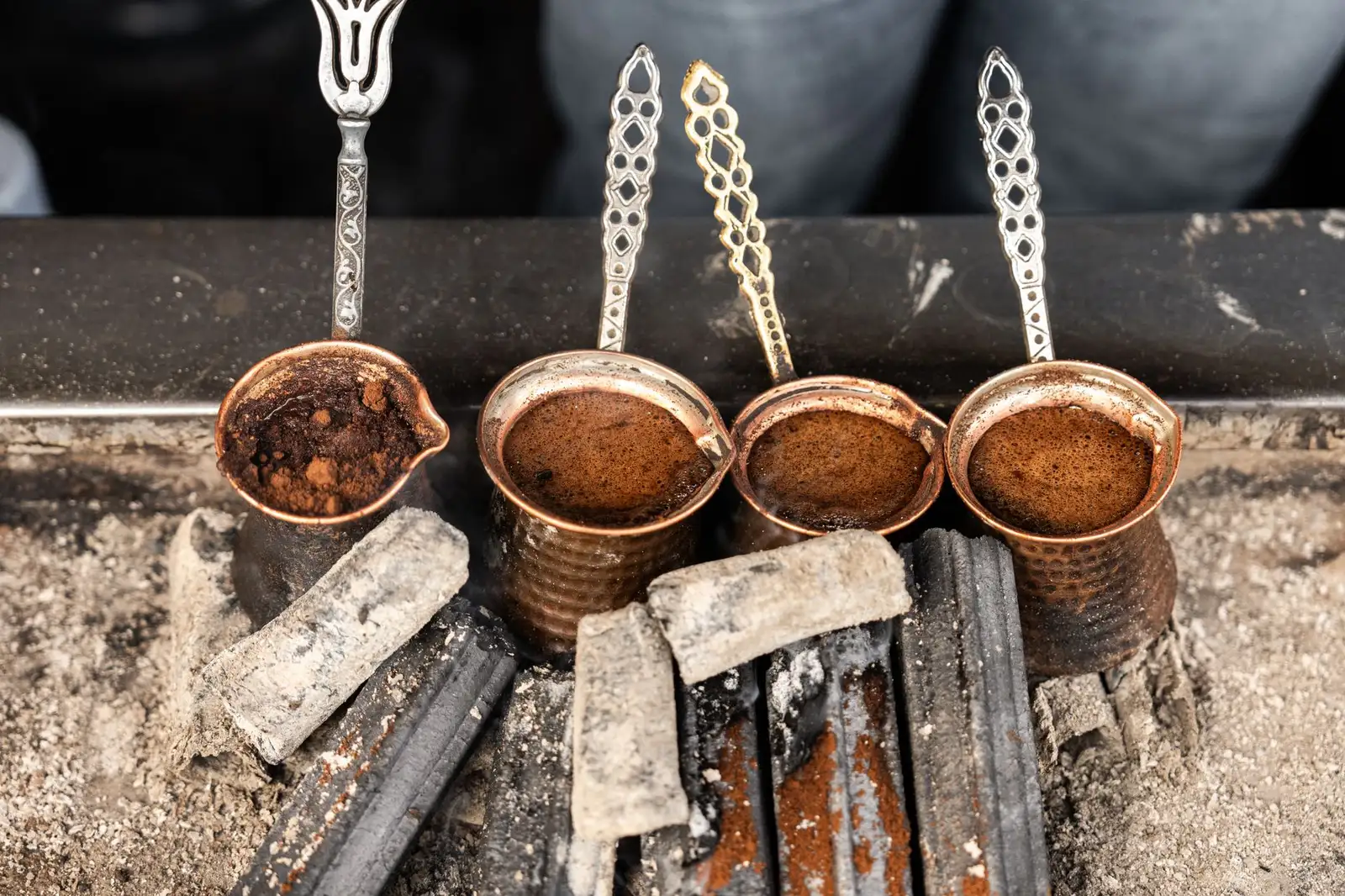
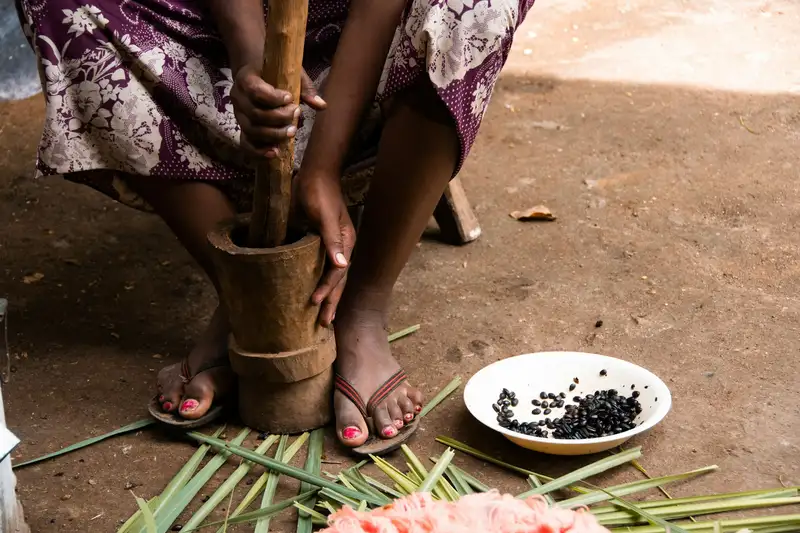
Travelers often describe the first round as almost shockingly strong: not bitter in the way espresso can be, but dense and earthy in ways that French press or pour-over coffee rarely achieves. The beans are ground with a mortar and pestle (mukecha and zenezena), and the coffee brews in a clay pot called a jebena, which has a rounded bottom and a narrow neck that naturally filters the coffee as you pour.
The cups are small. Ceramic, handleless, not much bigger than an espresso cup. Sugar is common, sometimes salt, and occasionally butter in certain regions: that last one catches most visitors off guard.
The Setting Is Part of It
Before any coffee is poured, the space is prepared.
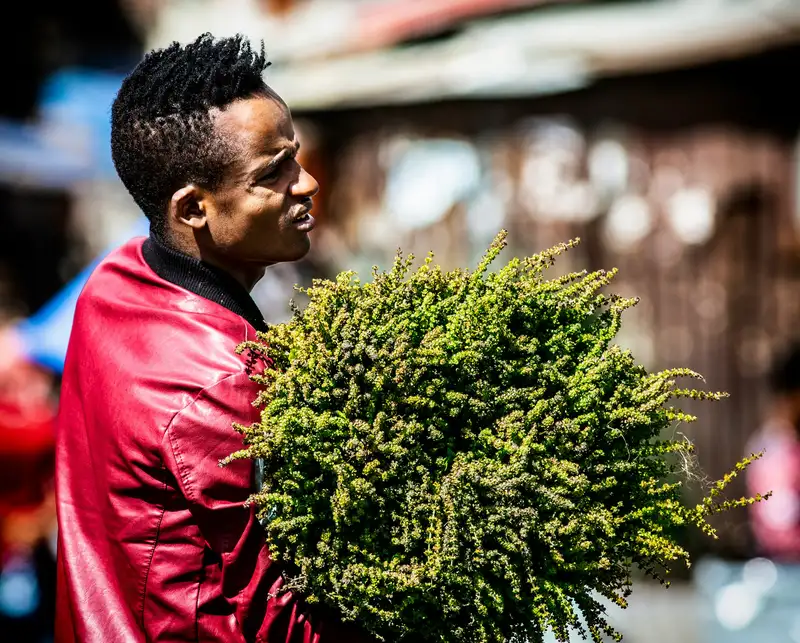
Fresh green grass or flowers get scattered across the floor or around the ceremony area. Incense, usually frankincense or a local resin called itan, burns throughout. The charcoal burner glows, the jebena sits on a small tray alongside the cups, and sometimes popcorn or kolo (roasted barley) appears as a snack.
None of this is mere decoration. The grass pulls the natural world inside. The incense marks the moment as distinct from ordinary time. Together, they signal that what happens here matters.
The woman conducting the ceremony (and in most traditional contexts it is a woman, though this varies by region and generation) controls the pace entirely. Guests don't rush her. They don't check their phones, or at least they try not to. The roasting alone can take fifteen to twenty minutes, during which conversation flows naturally, or people simply sit in companionable quiet.
That quiet deserves noting. There's a social ease in Ethiopian coffee ceremony culture that doesn't require constant talking. Silence between people who are comfortable together isn't awkward here; it's part of the rhythm.
What Outsiders Often Miss
A few things tend to catch visitors off guard.
The first is timing. An invitation to a home ceremony means you're probably looking at ninety minutes minimum, often longer. Expecting to drink one cup and leave in twenty misreads the entire point. The ceremony is the visit. Coffee is the medium, not the message.
The second is the roasting ritual itself. Your host will often bring the pan of roasting beans directly to each guest so they can wave the smoke toward themselves, a gesture of appreciation, of drawing the aroma in. If this happens, lean forward and wave the smoke your way. It's a small thing, but declining it or looking confused creates an awkwardness that's easy to avoid.
Then there are the grounds. At the end of each round, there'll be sediment at the bottom of your cup. You don't drink it, but you don't make a face about it either. Leave it there.
And about sugar: in many Ethiopian households, coffee arrives sweet. Asking for it without is fine, but in more traditional settings, particularly if an older woman has prepared the ceremony with care, pushing back can feel like a quiet rejection of her hospitality. Reading the room matters more here than personal preference.
Coffee as Status, Coffee as Community
The ceremony carries different weight depending on context.
In urban Addis Ababa, coffee shops (buna bets, literally "coffee houses") line nearly every block, many keeping at least a partial ceremony setup even in commercial settings. The pace runs faster than at home, the grass on the floor sometimes just a token gesture, but the three-round structure often holds. For practical matters like getting around Addis or other Ethiopian cities, frameworks for local transportation can help with logistics: but the coffee ceremony isn't an errand to schedule. It's an experience that expands.
Out in rural areas (particularly in the coffee-growing regions of Yirgacheffe, Sidama, or Harrar) the ceremony tends to be more elaborate, more unhurried, and far more central to social life. Some communities gather for a communal ceremony in the morning before any work begins. The smell of roasting coffee drifting from a doorway is, in some places, a kind of informal invitation.
There's also a ceremonial dimension tied to significant events: funerals, weddings, a child's birth, the return of someone who's been away. In those contexts, the ceremony moves beyond social custom. It becomes ritual in the fullest sense: a way of marking time, of acknowledging that something meaningful has happened.
A Micro-Scene: A Morning in Hawassa
Picture a small courtyard in Hawassa, a city on the edge of the lake of the same name in southern Ethiopia. It's about eight in the morning. A woman named Tigist, a neighbor of someone I was staying with, is setting up outside her front door. She spreads grass, lights incense, puts the charcoal burner together with practiced ease.
Two neighbors arrive without any apparent prior arrangement. They know, the way you know in a community where this happens every day. They settle onto low wooden stools. Conversation starts slowly, a child's school situation, an issue about a shared wall, then easier things, a joke, laughter.
The beans go into the pan. Tigist stirs constantly, watching the color shift from pale green to deep reddish-brown. After maybe fifteen minutes she brings the pan around to each person. Everyone leans in and waves the smoke toward themselves.
The grinding takes a few minutes. Coffee goes into the jebena with water. The pot sits on the coals. No one's watching the time.
When the first round comes, the cups are filled from a height, a small pour from maybe a foot up, which aerates the coffee slightly and is also beautiful to watch. The coffee is dense and dark. There's sugar on a small plate. Everyone takes some.
The conversation deepens. By the second round, the two neighbors are discussing something more personal, a family situation, a decision that needs making. The third round is quieter. The morning has opened up.
By the time it's over, almost two hours have passed. Nobody seemed to notice.
The Language Around Coffee
A few words help.
Bunna is coffee in Amharic. Buna tetu, "drink coffee", is a common invitation. Saying betam tiru no (it's very good) after your first cup will be warmly received. You don't need Amharic to participate, but a few words go a long way, especially with older hosts who may not speak English.
The phrase jebena buna refers to coffee made in the traditional clay pot rather than by machine. If you're in a coffee shop and want the ceremony experience rather than a quick cup, asking for jebena buna usually signals exactly what you're after.
The Coffee Ceremony and Ethiopian Identity
It's hard to overstate how central coffee is to Ethiopian national identity: not as an export commodity (though Ethiopia ranks among the world's top exporters), but as part of daily life.
There's a saying: buna dabo naw, which translates roughly as "coffee is our bread." It implies sustenance, necessity, ordinariness. Not a luxury or a treat, but foundational as food itself.
When the ceremony is performed well, there's a quality to it that doesn't translate easily into English. The closest I can get is "unhurriedness with purpose": each step done carefully, without wasted motion, but also without apparent urgency. The host isn't performing and she's not rushing. She's doing something she's done thousands of times, something that will be done thousands more.
That quality (a practice worn smooth by repetition, still alive and present) is what makes sitting through a full ceremony feel different from simply drinking good coffee elsewhere.
What the Ceremony Asks of Guests
Practically speaking, a few things help.
Arrive with time. If you've been invited and you have a hard stop in ninety minutes, think about whether that's enough, or whether you should explain at the outset. Leaving mid-ceremony is possible, but heading out before the third round tends to be noticed.
Sit low. Traditional seating is often on low stools or cushions on the floor. Getting comfortable with that posture for an extended stretch is worth thinking about beforehand.
Don't photograph without asking. The ceremony isn't a photo opportunity. Most hosts will say yes if you ask, but taking out a camera without acknowledgment can shift the mood in ways that are hard to walk back.
Engage with whatever food appears alongside the coffee, popcorn, kolo, sometimes small pieces of bread. Accepting what's offered is part of the social contract.
And perhaps most importantly: be present. The ceremony creates conditions for real conversation. Use them.
Finding the Ceremony as a Visitor
Travelers most often encounter the ceremony through guesthouses, restaurants, or cultural programs, where it's offered as part of the hospitality experience. That's a fine introduction, and the coffee is often excellent, but the experience tends to be abbreviated, one round, maybe two, with a general explanation for the group.
The fuller version happens in homes. If you're staying with a local family, or if someone you've met invites you, that's where the ceremony takes its full shape. Some operators who specialize in community-based travel, Culture Discovery Vacations is one example, structure trips around exactly this kind of household access, where meals, ceremonies, and daily routines unfold in genuinely domestic settings rather than staged ones. The difference between those two experiences is considerable.
Yirgacheffe and Sidama are worth visiting specifically for coffee culture. The beans grown there are considered among the finest anywhere, and local ceremony practices in those regions reflect generations of deep familiarity with coffee cultivation. Visiting a small farm where the cherries are still being processed, then sitting through a ceremony with that family using their own beans, reframes everything you thought you knew about what coffee actually is.
One Practice Worth Trying
If you sit through a coffee ceremony (whether in a home, a restaurant, or a community setting) try staying for all three rounds.
Not out of obligation, but as an experiment in pace. What happens to the conversation between the first round and the third? How does the room change? How do you change? Most travelers who commit to the full ceremony describe a kind of decompression somewhere around the second round, a letting go of whatever they'd been trying to get done next.
That's what the ceremony seems designed to produce. Not caffeine. Not even excellent coffee, though the coffee often is. Something else entirely, a particular quality of time that's slow and communal, the kind most of us spend very little of our lives inside.
It's worth staying for.


Comments (0)
No comments yet. Be the first!