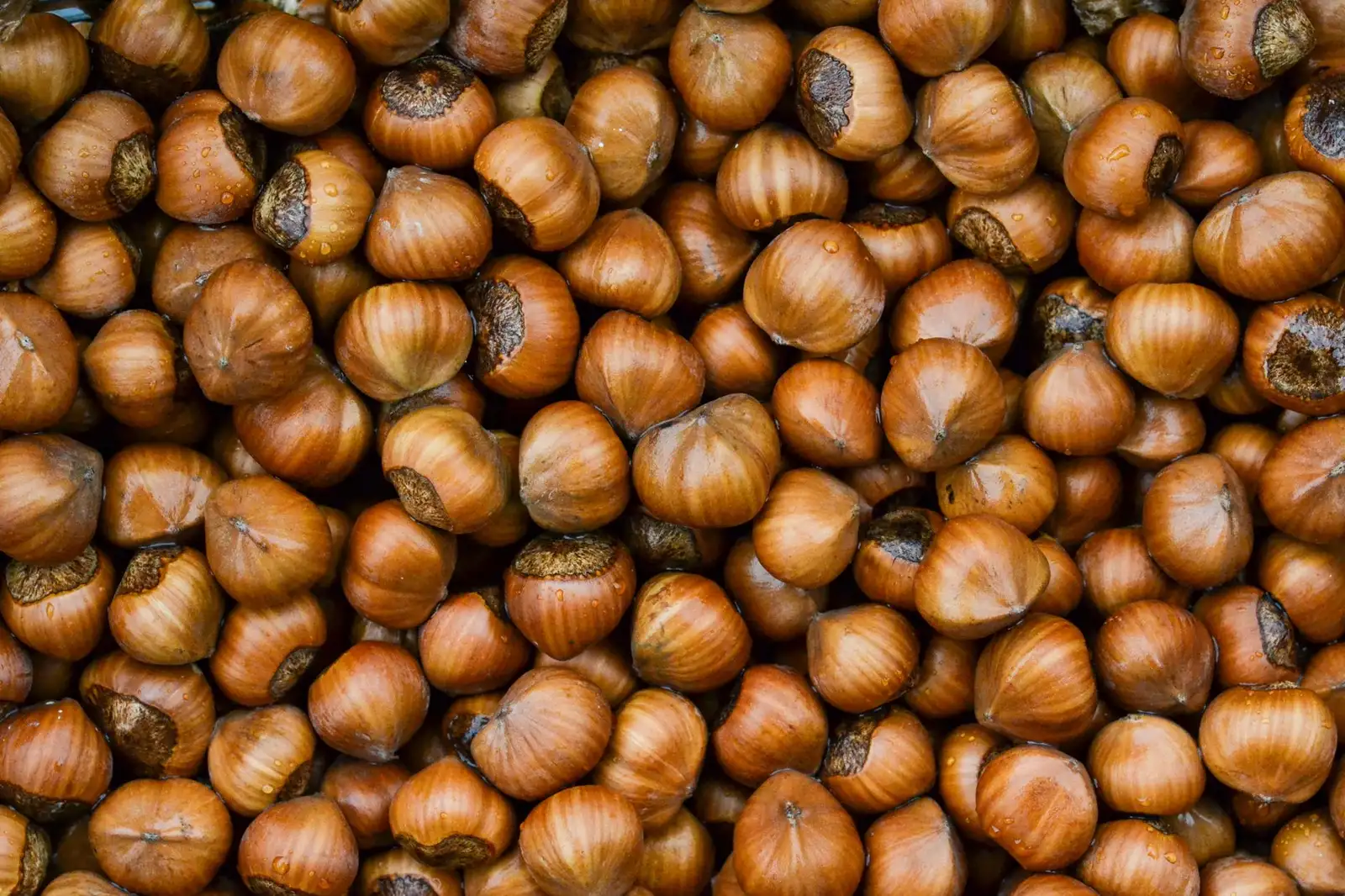

The first sound of the morning isn't a rooster. It's the crackle of tarps being unrolled under the hazelnut trees, a stiff plastic sheet snapping open in the cool air before the sun has cleared Monte Cimino. By six-thirty, a farmer named Franco (not his real name, but close enough to the men I've watched do this for years) is already walking the rows in rubber boots, checking which trees have started to drop their fruit and which are holding out another week. There's no ceremony to it. He just looks up, shakes a branch, and listens for the sound of nuts hitting canvas.
This happens every August and September in the hills around Soriano nel Cimino, a small town in the Viterbo province of Lazio, about an hour and a half north of Rome. Most visitors who come through this stretch of central Italy know it, if they know it at all, for its Medieval Chestnut Festival in October, when the town transforms into a costumed spectacle of flag-throwers and roasted chestnuts sold from wooden stalls. The hazelnut harvest gets none of that. It happens a month earlier, with no parade and no crowd, and that quietness is exactly what makes it worth understanding.
Why This Particular Hillside
The hills around Lago di Vico, the volcanic lake just south of Soriano, sit in one of Italy's older hazelnut-growing zones. The soil here is dark and mineral-rich, a legacy of the extinct Cimini volcano complex, and it drains in a way that hazelnut trees seem to like more than almost anything else you could plant. Corylus avellana doesn't need much coddling once it's established. It wants shade in the understory when young, sun as it matures, and a winter cold enough to force real dormancy. The Cimini hills give it all three.
The regional designation for this fruit is Nocciola Romana, a Protected Designation of Origin (DOP) that covers hazelnuts grown across parts of Lazio, including the area around Lago di Vico, and extending toward Caserta in Campania. Slow Food Italy has written about the variety's smaller size and thinner shell compared to the Piedmontese Tonda Gentile, and about the way local growers have historically sold it into the confectionery trade, where it ends up in gianduja pastes and torrone rather than eaten raw off the tree. If you've had a hazelnut gelato in Rome that tasted rounder and less bitter than the ones you get elsewhere, there's a decent chance it started here.
Hazelnut cultivation on a large scale is not unique to Italy, of course. Turkey produces the overwhelming majority of the world's supply, and if you're curious how Lazio's output compares globally, the FAO's FAOSTAT database breaks down hazelnut production by country and region in more detail than most travel guides would ever bother with. What that data doesn't capture, though, is the texture of a harvest morning in a place like Soriano, where the scale is small enough that everyone still knows whose hazelnut plot borders whose.
Morning: The Nets Go Down
Harvest here isn't a single day. It's a stretch of six to eight weeks, starting in late August and running into October depending on the year's heat and rain, with each grove ripening on its own schedule. The work happens in waves.
On a harvest morning, the first task is laying nets or tarps beneath the trees, something that used to be done entirely by hand with rakes and is now, on the larger holdings, done with tractor-mounted machines that vibrate the trunk until the ripe nuts let go. Smaller family plots, the kind that might be half a hectare tucked behind someone's house, still do it the older way: a long pole to knock loose branches, a broom to sweep nuts into piles, buckets carried two at a time to a central collection point. There's a rhythm to the sweeping that's almost meditative, if you're not the one doing it for six hours straight.
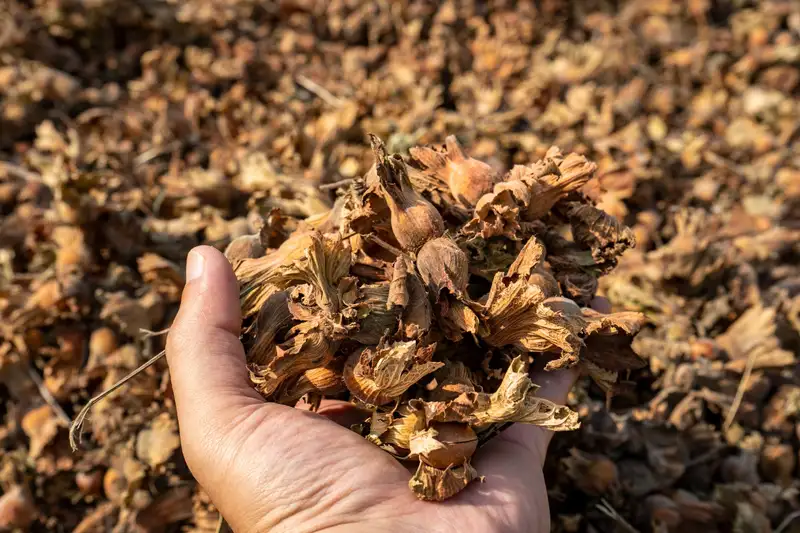
By mid-morning, trucks with wire-mesh trailers start moving slowly along the unpaved tracks between groves, collecting sacks. The husks, still green and slightly sticky this early in the season, get separated from the shells in a process that smells faintly grassy and bitter, nothing like the toasted aroma you get once the nuts are dried and roasted weeks later.
Midday: The Pause That Isn't Really a Pause
Lunch during harvest season doesn't stop the work so much as relocate it. Families eat in shifts, often standing near the collection trailers, often with bread and a hard cheese and whatever's left from the night before. This is one of the things visitors consistently get wrong about agricultural seasons in central Italy: they imagine a long, wine-soaked lunch under a pergola, the kind of scene sold in glossy Tuscany brochures. During an actual harvest, that scene mostly doesn't exist. The wine, if there's any at midday at all, is a small glass, and it's gone in five minutes.
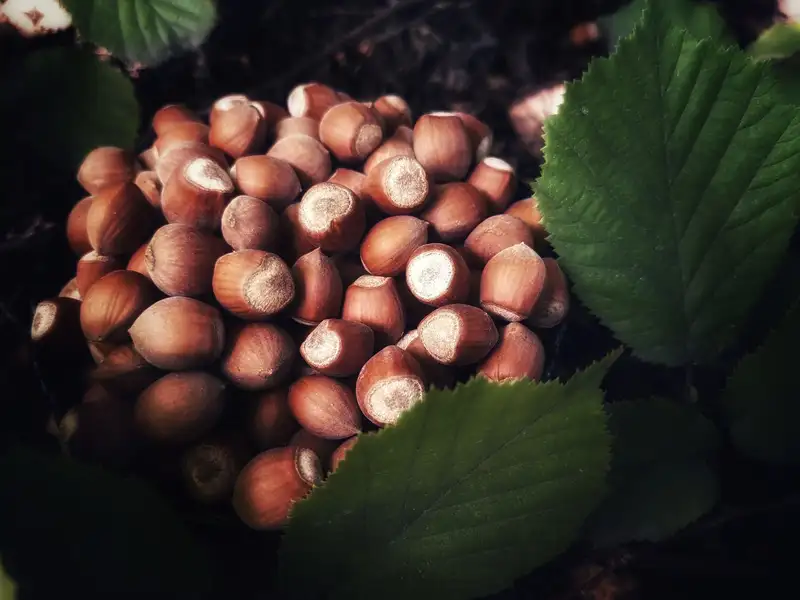
What does slow down, briefly, is the sorting. Someone, usually an older family member who's done this task for decades, sits with a wide flat basket and picks through a sample of the day's haul, checking for shells that are too light (meaning the kernel inside didn't fill out properly) or nuts with small holes bored by insects. It's tedious work, and it's also where a lot of the real knowledge sits. Ask someone doing this task how they can tell a good nut from a bad one just by weight in the hand, and you'll get an answer that took thirty years to learn and about ten seconds to explain, because that's how a lot of agricultural knowledge works. It's not secret. It's just embodied, and nobody thinks to write it down because everyone around them already knows it.
Evening: Drying, Sorting, the Quiet Version of Celebration
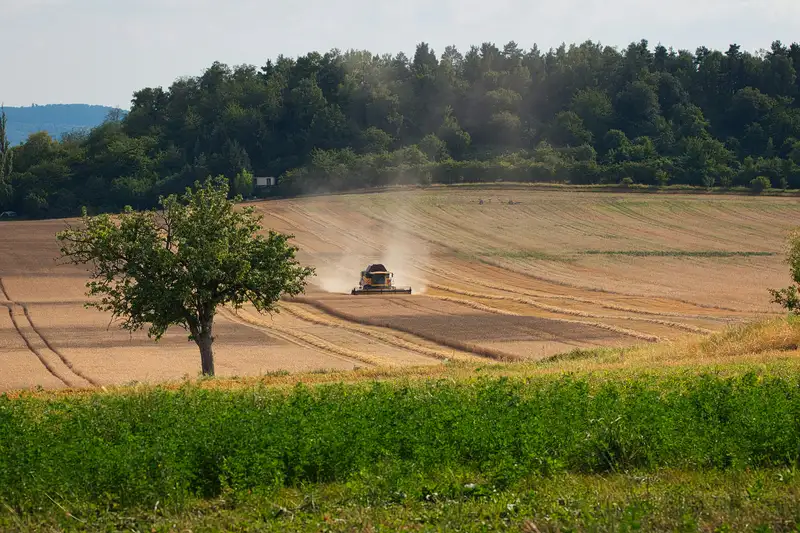
By evening the harvested nuts, husks removed, get spread out to dry, traditionally on raised wooden racks or wide mesh trays set in a barn or covered courtyard where air moves through but rain and dew can't reach them. Drying takes days, sometimes two weeks, depending on humidity, and a farmer will walk out at dusk just to run a hand through a tray and feel whether the shells have gone from slightly damp to properly crisp.
There isn't a hazelnut festival in Soriano the way there's a chestnut one. That's worth sitting with for a second, because it tells you something about how the two crops occupy different places in the town's identity. Chestnuts get the pageantry: the Sagra delle Castagne, the costumed contrade competing for the best display, the whole town outfitted in medieval regalia starting in mid-September, building toward the festival weekends in early October. The chestnut is public. It belongs to the town's self-image.
The hazelnut, by contrast, belongs to the families who grow it. It moves through a much quieter economy, sold in bulk to processors, kept in smaller batches for home baking, occasionally traded informally between neighbors ("I've got more than I need this year, take a sack"). If you're driving through the Cimini hills in September looking for a festival to photograph, you won't find one for the hazelnuts, and I think that absence is actually the more interesting fact than any festival would have been.
The Table, Later
Where the hazelnut does show up, publicly and with real pride, is on the table, months after the harvest itself. Torrone made with local nocciole shows up around Christmas markets in Viterbo and the surrounding towns. Home bakers fold ground hazelnuts into simple cakes, torta di nocciole, dense and only lightly sweet, meant to be eaten with coffee rather than as dessert in the American sense. And in kitchens across this part of Lazio and neighboring Umbria, hazelnuts turn up chopped into pasta dishes with butter and sage, or crushed over roasted vegetables, in a way that treats them as a savory ingredient just as often as a sweet one.
I've spent time in this exact stretch of countryside with Culture Discovery Vacations, which runs cooking weeks based in Soriano nel Cimino, and while their itineraries lean toward the chestnut festival season and the wine harvest that overlaps with it, the hazelnut groves are part of the same landscape guests pass through on the way to farm visits. You'll see the trees before you understand what they are: mid-sized, multi-trunked, growing in orderly rows on hillsides that look almost too tidy to be wild. Ask a local cook what she does with a bowl of hazelnuts in October, and you'll likely get an answer involving butter, honey, or a specific family recipe for beans, faggioli all'uccelletto, that has nothing directly to do with hazelnuts at all but somehow always gets mentioned in the same breath, because in a place like this, food conversations tend to wander sideways into whatever's currently in season.
What Tourists Misread
The most common misunderstanding I've noticed, both from visitors and from some guidebooks, is treating agricultural seasons here like they're performances waiting to be watched. There's an instinct to want the harvest to look like something: workers in traditional dress, a photogenic gathering, maybe a folk song. What actually happens is closer to a factory shift stretched across a hillside, punctuated by long stretches of nothing much happening at all, followed by a burst of activity when a particular grove hits peak ripeness and everyone available drops what they're doing to get the nuts in before rain or wind knocks them into the mud.
Is that less interesting to watch than a festival? Maybe, if what you want is spectacle. But if what you want is to understand how a place actually organizes its year, the hazelnut harvest tells you more than the chestnut festival does, precisely because nobody's performing it for you. You're seeing labor, not theater.
There's also a timing confusion worth clearing up. People sometimes assume hazelnuts and chestnuts are harvested together, since both grow in these same wooded hills and both show up in the same kitchens by winter. They're not simultaneous. Hazelnuts finish mostly by late September or early October, right around when the chestnut harvest is only getting started, and right when the town of Soriano begins its month-long transformation into the medieval setting for its October festival. If you time a visit for the chestnut celebration itself, you'll likely have missed the hazelnut harvest by a couple of weeks, though you'll still see the trees, stripped bare of leaves and nuts both, standing quietly in the background of whatever else you're there to see.
For anyone thinking about extending a stay in this part of Lazio into the surrounding hills, the trails up Monte Cimino run right through beech forest that borders many of these same hazelnut plots, and walking them in early autumn puts you close enough to smell the difference between a grove that's just been harvested and one that's still a week out.
A Small Practice, If You're There in Late Summer
You don't need an invitation to a private harvest to notice any of this. Drive the back roads between Soriano and Caprarola in late August or September, and you'll pass groves with tarps already down, or trucks parked at odd angles at the edge of a field. Slow down. If you see someone working, a wave usually gets a wave back, and in my experience, a polite question in halting Italian about whether the nuts are close to ready will often get you a longer answer than you expected, sometimes with a handful of hazelnuts pressed into your hand at the end of it (still in the husk, still slightly green, definitely not ready to eat yet, but that's not really the point).
The practice, if there is one, is this: pick one roadside stand or one farm gate, and just stop long enough to ask what week they're in. Not the whole harvest, not the whole season. Just this week, this grove, this batch drying on the rack out back. You'll learn more from that one conversation than from any festival calendar, and you'll walk away with a better sense of what "harvest" actually means here, which is less an event than a long, patient argument with the weather that a family wins, mostly, every year.

Comments (0)
No comments yet. Be the first!