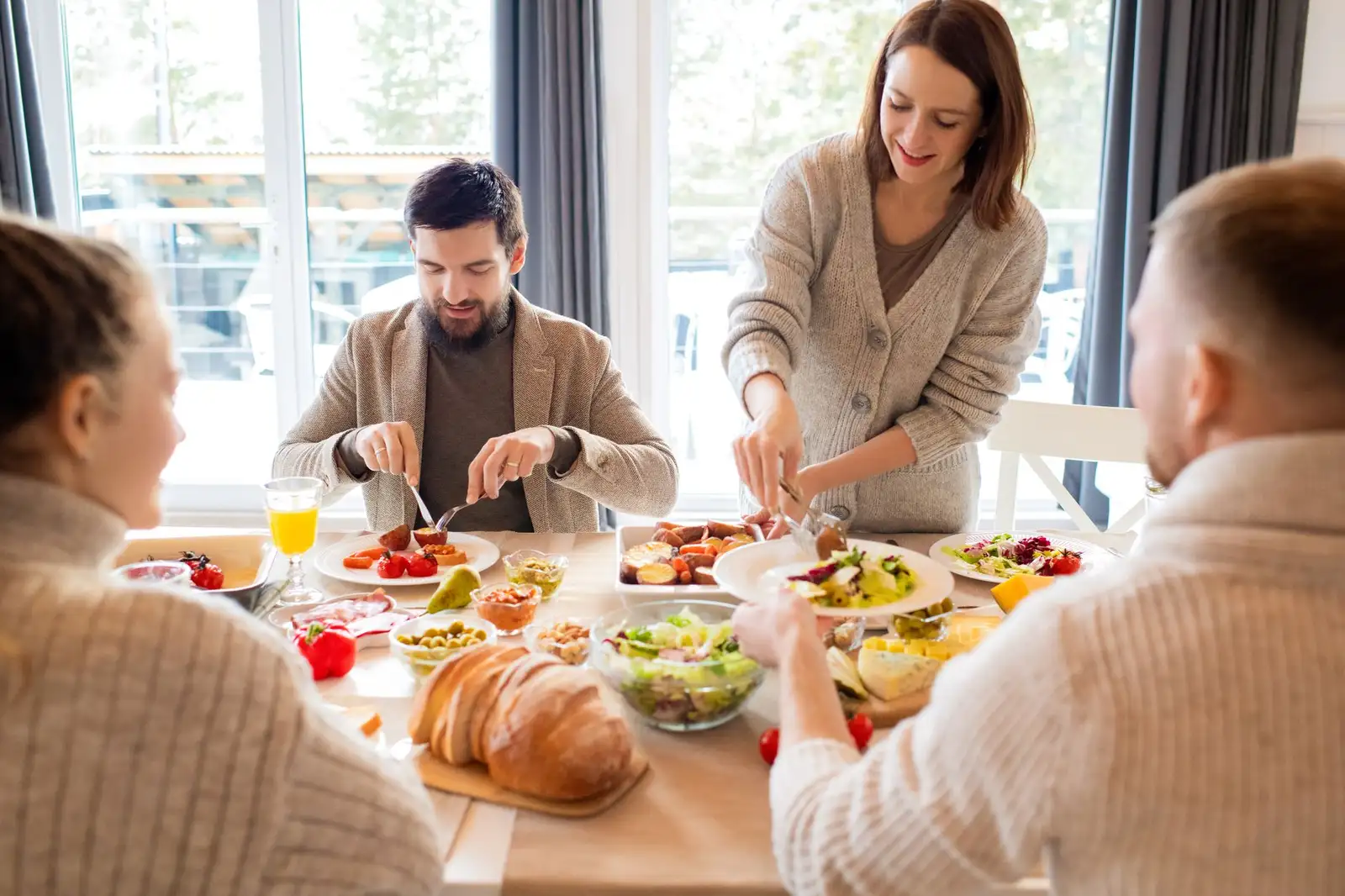

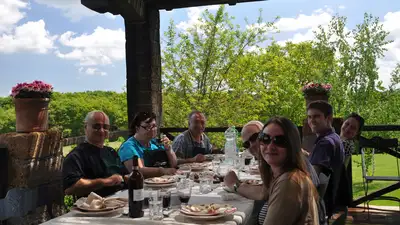
The food is gone. Or mostly gone, a few tortillas still warm under a cloth, some salsa left in the molcajete, a scattering of rice at the edge of a plate. But nobody moves. The grandmother refills the agua de jamaica without being asked. An uncle is mid-story, and the story is getting better. A child has fallen asleep across two chairs pulled together. The afternoon light has shifted from bright to golden without anyone noticing.
This is sobremesa. And in Mexico, it's not an accident or an indulgence. It's the whole point.
What the Word Means
Sobremesa translates literally as "over the table", the time you spend at the table after eating. The concept exists across Latin America and Spain, but in Mexico it carries a particular weight, a particular warmth. It's an active, deliberate staying.
You could argue that the meal itself is the excuse. The mole and the arroz and the frijoles bring everyone to the same place at the same time. Sobremesa is what happens once the pretense of eating has been satisfied.
In a culture where family and friendship are woven into daily survival, not just sentiment, the table becomes a kind of commons. A shared space where rank loosens a little, where the formalities of work or obligation fall away, where a person might finally say what they've been carrying all week.

A Sunday in Oaxaca City
Picture a Sunday lunch in a home near the Mercado de Tlacolula. The meal started around 2:00 PM: which is typical for a comida, the midday meal that remains the largest of the day across much of Mexico. By 3:30, the dishes have been pushed to the side. Nobody has cleared them yet. That would signal the meal is over, that the gathering has an end, and nobody wants to say that yet.
The conversation has moved through at least four subjects: a cousin's new job in Guadalajara, the price of avocados this season, an old disagreement about a boundary wall that somehow loops back around to being funny, a memory of a grandmother who died years ago and is still talked about in present tense.
There is coffee now. Strong and sweet. Maybe a small glass of mezcal for the adults. The children drift in and out: sometimes listening, sometimes wandering to another room, always circling back.
This is not a special occasion. This is Sunday.
The Unspoken Rules
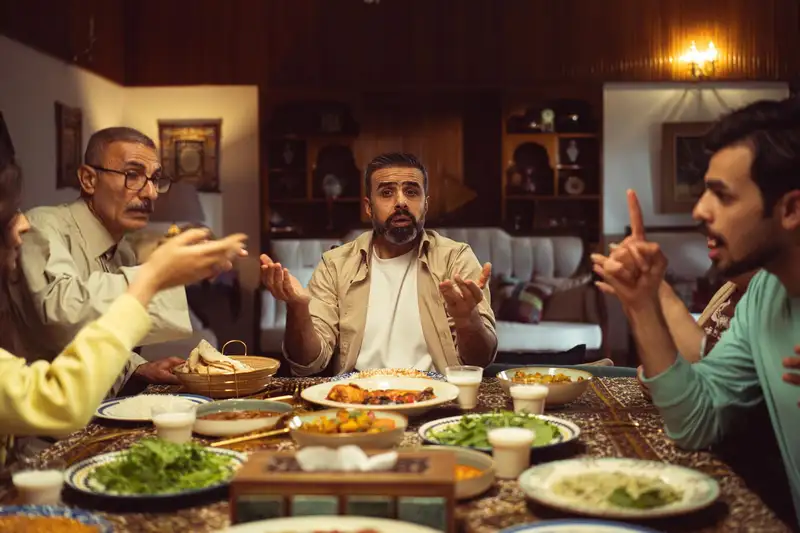
Every social ritual has its grammar, its unspoken structure. Sobremesa is no exception.
Refilling drinks is one of the most legible signals of hospitality. A host who keeps your glass full (whether it's agua fresca, a soft drink, coffee, or mezcal) is telling you: don't leave yet, we're not done. Accepting the refill is how you answer. It's a small transaction, repeated many times over an afternoon, that functions almost like a conversation itself.
Clearing plates too early is one of the more common ways visitors can misread the room. In many North American and Northern European contexts, clearing the table signals attentiveness, efficiency, care. In the middle of a Mexican sobremesa, it can read as a subtle push toward the door. The dishes will get cleared. But not while the stories are still going.
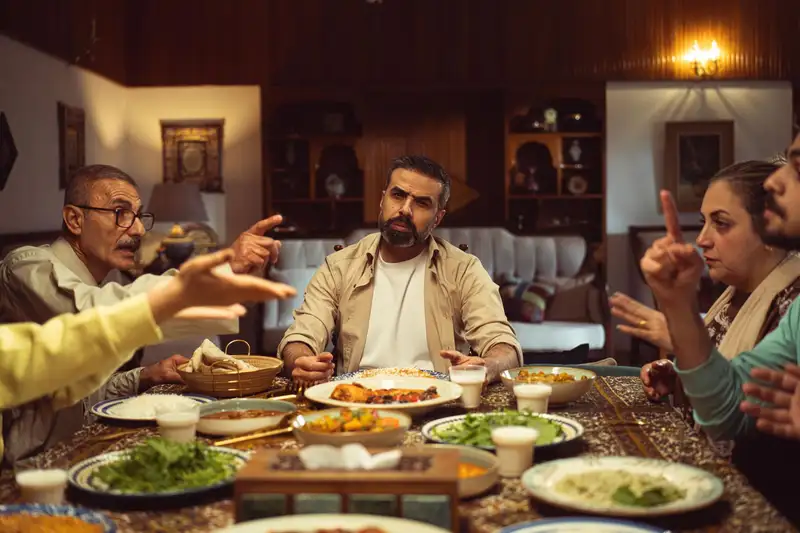
What moves at the table during sobremesa is hard to catalog. Jokes, obviously. Family history. Gossip that's delivered with such warmth it barely qualifies as gossip. Advice that doesn't announce itself. A repeated story often matters more the second time, because now you understand more of the context.
There's a generosity in this that's worth naming. The willingness to sit with another person, unhurried, asking questions and listening to the answers; it's increasingly rare, and in Mexico it hasn't been abandoned for the pace of other things.
Comida: The Meal That Makes Sobremesa Possible
To understand sobremesa in Mexico, you have to understand the structure of the Mexican eating day, which is genuinely unlike what most visitors expect.
Breakfast (desayuno) is often small: maybe a piece of pan dulce, a cup of café de olla, perhaps fruit or a light antojito from a street vendor. Lunch, called comida, is the anchor. It typically runs from around 2:00 to 4:00 PM and is the most elaborate meal of the day, often involving multiple courses: soup, a main dish, beans, rice, tortillas, and dessert or fruit. Dinner (cena) tends to be lighter and later, sometimes not until 8:00 or 9:00 PM.
This structure matters because sobremesa is built into the architecture of the comida. The meal is long enough, substantial enough, and timed late enough in the day that there's no natural rush to be elsewhere. The afternoon opens up after it. And that opening is what sobremesa fills.
In working contexts this has shifted, urban Mexico City schedules, for instance, have compressed the lunch break significantly for many office workers. But in family homes, on weekends, in smaller cities and towns across Jalisco, Oaxaca, Yucatán, Veracruz, the comida and its long tail still hold.
What Gets Said
One of the things that makes Mexican sobremesa feel distinct from polite post-meal chat elsewhere is the emotional range it permits.
Laughter is the most obvious register. Mexican humor at the table tends to be quick, layered, often self-deprecating. One person makes a joke at their own expense, and the table erupts, and then another tops it. This isn't performance, or not only performance. It's a way of being together that doesn't require vulnerability to be real.
But there's also a willingness to go somewhere heavier. A health scare. A marriage that's struggling. A child who's been difficult lately. These surface during sobremesa in a way they don't in more formal or transactional settings. The shared meal creates permission. You've already broken bread together. You've already said buen provecho. The table is a safe container.
The UNESCO Intangible Cultural Heritage frameworks around communal eating practices point to this: how shared meals function not just as nutrition but as social infrastructure, reinforcing relationships and transmitting values across generations. In Mexico, sobremesa is one of the clearest examples of that function in daily life.
Hospitality as a Verb
Mexican hospitality doesn't announce itself. It keeps refilling your glass.
There's a quality to it that visitors sometimes find disorienting at first, the insistence, the generosity that doesn't quite take no for an answer. If you've ever been at a Mexican table and tried to decline more food only to find it appearing on your plate anyway, you know what I mean. The host isn't ignoring you. They're expressing a claim that doesn't translate cleanly into the language of individual preference and consent.
The underlying logic is: while you are in my home, your needs are my responsibility. That's not a small claim. And sobremesa extends it into time, keeping you at the table, keeping the conversation alive, is a way of saying: I'm not ready for this to end. You matter enough to stay for.
I think this is why outsiders sometimes misread sobremesa as unstructured or accidental. It doesn't look like hospitality in the formal sense; there's no performance, no ceremony. But the care is absolutely intentional.
Children at the Table
One small thing that strikes visitors who haven't grown up in this culture: children in Mexico are rarely removed from the sobremesa.
They sit at the table during adult conversation. They listen to things they may not fully understand. They fall asleep in chairs while the grown-ups keep talking. And when they're old enough to contribute (a funny observation, a question that derails everything) they're welcomed into the conversation without condescension.
The culture reproduces itself this way. The child who falls asleep at the table while the uncles argue about football and the aunts discuss a neighbor's business and the grandmother steers the whole thing back to meaning, that child is learning. How to be at a table. How to listen. How to be a person in a group of other people.
By the time they're teenagers, they already know how sobremesa works. Not because they were taught it, but because they lived inside it, Sunday after Sunday, year after year.
What Visitors Often Miss
Most visitors to Mexico spend time in restaurants, which are a different context. At a restaurant, the sobremesa still exists; you'll notice that Mexican diners tend to linger long after plates are cleared, that waiters don't rush the check, that the table feels occupied in a way that resists being turned over. But the full depth of the practice only becomes visible in a home.
If you're invited to a house for comida, and the meal is a Sunday meal, and there are multiple generations present, that's the real thing. The invitation to stay after eating is the actual invitation. The meal is the mechanism. The sobremesa is the destination.
Some travelers are uncomfortable with unstructured time at a table. They're used to meals with clear beginnings and ends, used to knowing when it's appropriate to leave, used to schedules that continue past the meal. Sobremesa asks you to let all of that go for a while. It asks you to be nowhere else, at least for this afternoon.
That can feel strange. And then it can feel like relief.
The Slow Drift Toward Evening
A proper Sunday sobremesa doesn't end so much as dissolve.
Around 5:00 or 6:00 PM, there might be a collective movement, a child needs to be put to bed, a drive is ahead, the remaining dishes finally get cleared and the act lands in a new way now, no longer a signal to leave but an acknowledgment that the leaving is already underway. There are hugs. Long ones. The kind that involve actual holding, not the performative back-pat of obligation.
In Guadalajara I've noticed that farewells from a Sunday comida can take almost as long as the sobremesa itself. You say goodbye in the dining room, then again at the front door, then again in the street, then a memory surfaces and you stand on the sidewalk for another twenty minutes. It's a different relationship to ending things.
The reluctance to let the gathering close is the same impulse that kept everyone at the table for three hours. Nobody wants to be the one who ends it.
A Note on Mezcal and Coffee
The drinks of sobremesa deserve a mention.
In Oaxacan homes, a small pour of mezcal often appears after the meal, not as a centerpiece, but as a quiet gesture. It slows everything down further. It's a signal that we're in a different register now, past the business of eating, into contemplation.
Coffee, especially café de olla (brewed in a clay pot with cinnamon and piloncillo), plays a similar role. It's sweet and warming and unhurried. You don't rush a cup of café de olla. The cup itself seems to know this.
Visitors who want to understand sobremesa more directly might look at Turismo de México for context on regional food culture, though honestly, the best documentation is a Sunday afternoon at someone's table.
When the Pace Changes
It's worth saying: sobremesa isn't universal in Mexico in the way it once was.
Urban professional life has compressed it. Younger generations in Mexico City, working long hours with commutes that eat the edges of the day, often can't sustain the three-hour Sunday lunch their grandparents took for granted. The comida hour has shortened. Some families have shifted their main meal to the evening, which changes the rhythm entirely.
This doesn't mean sobremesa is disappearing; I don't think that's true. But it's under pressure, the way all practices that require unhurried time are under pressure in fast economies. The families who hold onto it do so deliberately, which means they know what it's for.
Some travelers who care about this kind of depth, spending time inside daily life rather than alongside it, find that small group travel with local connections makes this kind of access more possible. Culture Discovery Vacations, for example, builds its Mexico itineraries around exactly this kind of daily-life immersion, including home meals where the sobremesa is part of the experience, not an afterthought.
Try This
If you're in Mexico and you find yourself at a table after a meal, resist the reflex to calculate when it's appropriate to leave. Don't check your phone. Don't look at what's next.
Instead: ask a question. A real one, about what you noticed during the meal or what you've been curious about. Then listen to the whole answer, including the parts that seem to go sideways. Let the conversation take you somewhere you didn't plan to go.
That's it. That's the practice. The whole thing (the refilled glasses, the sleeping children, the long goodbyes) follows from that one decision to stay and pay attention.
Sobremesa isn't something you observe. You have to sit down inside it.
If you're thinking about the logistics of getting between meals and cities, Mastering Local Transportation: Frameworks for Efficient Mobility offers a practical framework for building flexibility into your travel days, which matters a lot when your afternoon might unexpectedly stretch into evening.

Comments (0)
No comments yet. Be the first!