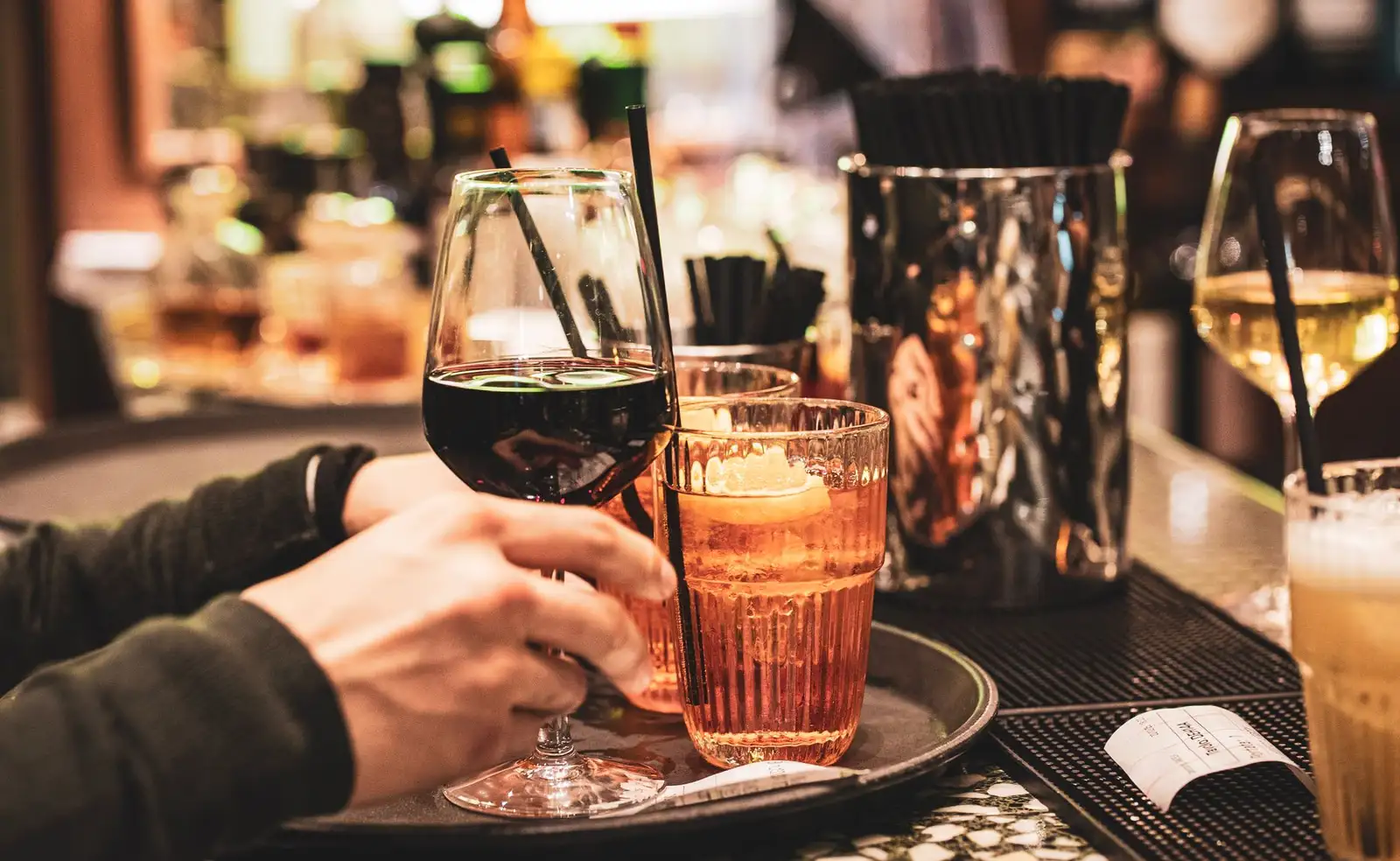

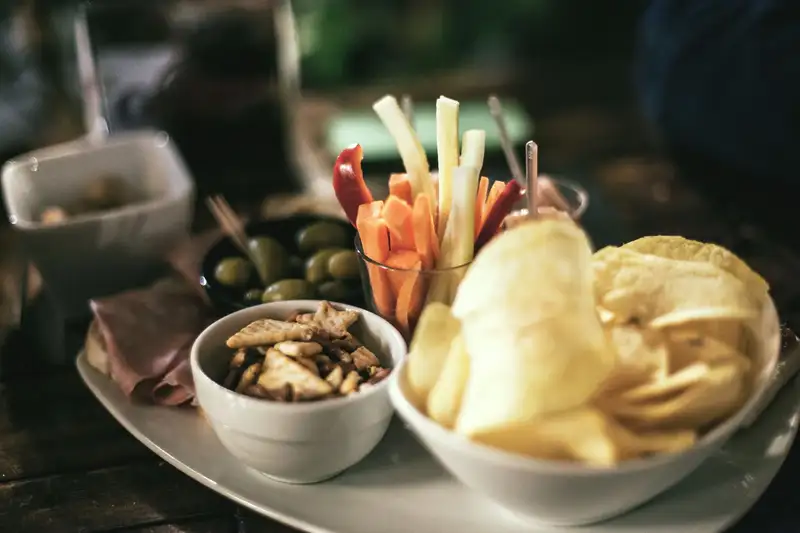
Half past six on a Thursday in Milan, and the Navigli canal is already orange with Spritz. Bartenders line small ceramic bowls along the bar top: taralli, olives dusted with chili, cubes of parmigiano stuck with toothpicks. A group of three women, still in their work blazers but with sneakers swapped in for heels, lean against the railing above the water. Nobody is checking a phone. Nobody seems to be in a hurry to get anywhere else. This is the hour when Milan exhales.
If you ask a tourist what aperitivo is, you'll usually get some version of "happy hour." That's close enough to be useful and wrong enough to miss the point entirely.
It's Not Happy Hour, and That Distinction Matters
Happy hour, as most of the world understands it, is a discount mechanism: cheaper drinks at a dead time to fill empty seats before the dinner crowd arrives. Aperitivo isn't a discount. It's a transition, a daily hinge between the obligations of the day and whatever the evening holds, and Italians treat it with something close to ceremony.
The word itself comes from the Latin aperire, to open, and the drink is meant to open the appetite rather than satisfy it. That's the original logic: a bitter, low-alcohol drink before dinner to get the stomach ready for a meal that, in much of Italy, doesn't start until 8:30 or later. Over roughly two centuries, that simple appetite-opener turned into something bigger. Now it's a social institution with its own unwritten rules, its own geography, and its own regional dialects of snack and spirit.
Where It Started
Turin gets most of the credit, and by most accounts, deservedly so. The city's vermouth industry took shape in the late 1700s, with the fortified, herb-infused wine becoming something Torinese drank before meals in the cafes along Via Po and in Piazza San Carlo. Antonio Benedetto Carpano is usually named as the figure who codified vermouth as we know it, and the habit of sipping it slowly before dinner spread from there.
Campari followed in the mid-1800s, invented in Novara, and by the early 20th century the bitter-red aperitivo had become a fixture of café culture across the industrial north. Milan, with its fast-moving office culture and dense population of workers clocking out around six, eventually turned the simple pre-dinner drink into something closer to a meal substitute: the apericena, which we'll get to.
You can read more about the formal food and drink customs that shape daily Italian life through Italy's national tourism board, which treats aperitivo less as a tourist attraction and more as a described fact of how the country eats.
The Hour Itself
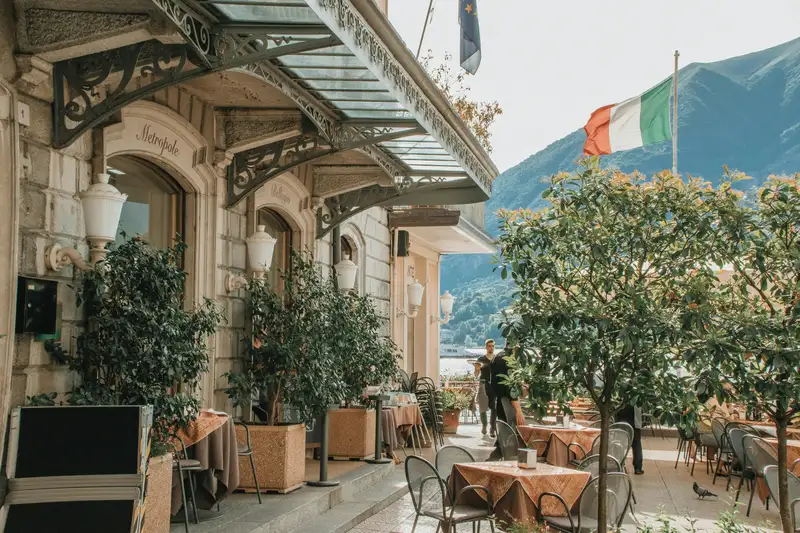
Walk through almost any Italian city between 6:00 and 8:00 in the evening and you'll notice the shift happen in real time. Shops start pulling down their metal shutters. Office workers spill out in twos and threes. Bars that were nearly empty an hour earlier suddenly fill with people standing, glasses in hand, voices rising just slightly over the sound of ice against glass.
In Turin, the rhythm looks different from Milan's. At a cafe near Piazza San Carlo, an older man in a gray wool coat sits alone with a small glass of vermouth and a folded copy of La Stampa, in no rush, nursing the drink for the better part of an hour while he watches the square fill and empty. There's no buffet here, no spread of food. Just the drink, the paper, and the particular pleasure of sitting still while the city moves around you.
Venice does it differently again. In the bacari, the small standing-room bars tucked into the calli near the Rialto, aperitivo takes the form of ombra (a small glass of wine, the word literally meaning "shadow," tied to an old story about wine casks kept in the shade) paired with cicchetti: little plates of baccalà, marinated sardines, polenta, or boiled egg with anchovy. You order, you eat, you move to the next bar. An evening's aperitivo in Venice can turn into a slow crawl across three or four bacari, never staying long enough to sit down.
What's Actually on the Table
The drink itself tends to fall into a narrow, recognizable range: Spritz (Aperol or Campari, prosecco, soda water), Negroni, vermouth on its own or with soda, or increasingly, a glass of local wine. Low alcohol and bitter notes are the common thread, because the point was never to get drunk before dinner. It was to wake the appetite up gently.
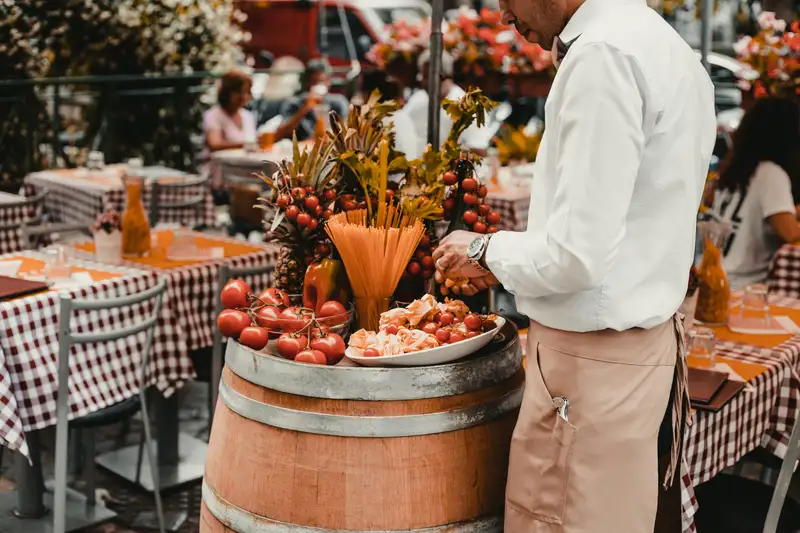
Food is where things get regional, and where the rules loosen the most. In Milan, aperitivo can look almost like a free dinner buffet: order one drink and you get access to a spread that might include pasta salads, cured meats, mini pizzas, rice dishes, and vegetables. This is the apericena, a Milanese invention that blends aperitivo and cena (dinner) into one word and one event, popular enough with students and young professionals that it's reshaped how a whole generation eats on weeknights.
Further south, the food gets lighter and more precise. In Rome, you're more likely to get a small bowl of olives, some taralli, maybe a plate of bruschetta, alongside your Spritz or Negroni, rather than a full buffet. The drink stays the center of attention. In Puglia and Sicily, aperitivo often merges into the evening passeggiata, the slow walk through town that happens as the heat breaks. People stand outside a bar with a drink in hand, kids running past on the piazza stones, and the whole thing feels less like a scheduled event and more like something that's just always been happening at this hour, in this spot.
The Social Choreography Nobody Explains to You
Here's what doesn't show up in most guidebooks: aperitivo has etiquette, and it's mostly invisible until you break it.
Order a cappuccino at six in the evening and you'll get served, because Italian bartenders are polite, but you'll also mark yourself immediately as someone who doesn't know the hour. Cappuccino belongs to the morning. At aperitivo time, the drink is wine, Spritz, vermouth, a bitter cocktail, something with a little edge to it. The same logic that keeps Italians from ordering a cappuccino after dinner (a genuine faux pas, where espresso or a digestivo like grappa or limoncello takes over instead) governs the aperitivo hour too. Drinks have their time of day, and locals know the schedule without ever having to think about it.
There's also a quiet distinction between standing and sitting. In many bars, a drink taken standing at the counter costs less than the same drink taken at a table, where a service charge (sometimes called coperto) gets added. Nobody announces this. You just notice the prices on the handwritten chalkboard behind the bar are different from the menu on your table, and you adjust.
Duration matters too, though less rigidly. Aperitivo isn't meant to stretch into a three-hour affair the way a Sunday lunch might. It's a transition, not a destination, usually running an hour, sometimes less, before the group either disperses for dinner or moves on together to a restaurant. Overstaying doesn't get you thrown out, but it does start to feel, even to an outsider, like you've missed the cue that the evening wants to move to its next room.
And who pays? It varies, and nobody seems bothered by the variation. Among friends, rounds get bought and the ledger evens out over time. Among colleagues, it's often just each person covering their own. The rigidity Americans sometimes bring to splitting a check, down to the last euro, tends to read as oddly formal here. Nobody's counting that closely. A nod, a kiss on the cheek, a bartender remembering your order—these encode rank, trust, and belonging. Here's how greeting rituals work across cultures, if you want to understand why these small gestures matter.
Why Italians Actually Do This
It would be easy to frame aperitivo as just another instance of Italians knowing how to enjoy life, the kind of soft cultural compliment that tourism marketing leans on constantly. But that framing misses something more specific: aperitivo works because it gives people a low-stakes, recurring reason to be with other people, every single day, without needing an occasion.
Nobody needs a birthday or an anniversary to justify an hour at the bar. The hour exists on its own terms. It's built into the day the way a lunch break is, except its purpose is explicitly social rather than nutritional. You stand next to your neighbor, your colleague, your cousin's husband, and you talk about nothing important for forty-five minutes, and that turns out to matter more than it sounds like it should.
I've spent a lot of time over the years in small towns across Italy where this logic plays out at a slower, more intimate scale than it does in Milan or Rome. In towns where everyone's known each other for decades, aperitivo hour often blurs into the broader daily pattern of people congregating in the piazza, the richest man in town having a glass of wine next to the poorest, elderly men who've been friends since childhood standing in a loose circle in the shade while their wives finish preparing dinner nearby. It's one more thread in a daily fabric where entertainment isn't really about what you're drinking or eating, it's about who you're standing next to while you do it.
That's part of what Culture Discovery Vacations tries to build its trips around: not a performance of Italian culture staged for visitors, but the actual unglamorous repetition of daily life, the same bar, the same barista who remembers your order by day two, the same handful of regulars working through their evening Spritz while the piazza fills up around them. It's a different proposition than being handed a drink menu at a hotel bar. You're being folded, briefly, into a pattern that's been running in that town for longer than anyone currently drinking in it has been alive.
This is also where the line between tourist aperitivo and local aperitivo gets blurry. It's real, and it's not fake, but it's not quite the same rhythm as the one playing out three streets over, where regulars are paying attention to the same bartender's moods they've tracked for a decade. The question of what counts as the "real" version of a cultural practice versus a version staged for outsiders comes up constantly in travel, and the piece on what "authentic" actually means is a useful read if you want to think harder about where that line actually sits, because it's rarely as clean as "tourist bar bad, local bar good."
For a broader look at how food and drink customs shape daily rhythms across the country, National Geographic's coverage of Italy is a reasonable starting point, though it tends toward the highlight reel rather than the week-after-week pattern of ordinary evenings.
Regional Variation, One More Pass
The regional differences deserve a closer look, because they reveal how each Italian city thinks about the transition from day to evening.
Milan treats aperitivo as efficient and almost transactional: pay for a drink, get access to food, often enough food that dinner becomes optional. It fits a city that moves fast and works hard and wants the evening to start paying off immediately once the workday ends.
Turin, the birthplace of the whole tradition, treats it as something closer to contemplative. The drink matters more than the food. Sitting matters more than standing. The hour is meant to be stretched, not filled.
Venice turns it into motion: a crawl between bacari, a small glass here, a bite there, conversation picking up and dropping off as you move through narrow streets that don't allow for much lingering in any one spot.
Rome sits somewhere in between, closer to Turin's drink-first instinct but with a looser, louder social energy, more rounds bought for the table, more voices overlapping.
And the south runs on its own clock entirely, later, slower, more woven into the general practice of being outside in the evening rather than treated as a separate appointment on the calendar.
None of these is the "correct" version. They're just different answers to the same question: how do you want to spend the hour between work and dinner?
One Thing to Try
Next time you're in Italy, don't order aperitivo at a place recommended for its view or its photogenic cocktail menu. Pick a bar within walking distance of wherever you're staying, the kind with handwritten chalkboard prices and regulars who clearly know the bartender's name. Go at 6:30, order whatever the bartender suggests without specifying, and stay for exactly one drink, no more, no less. Watch who comes in behind you, and watch how long they stay. You'll learn more about the rhythm of that particular street in forty-five minutes than most guidebooks could tell you in forty-five pages.
Comments (0)
No comments yet. Be the first!