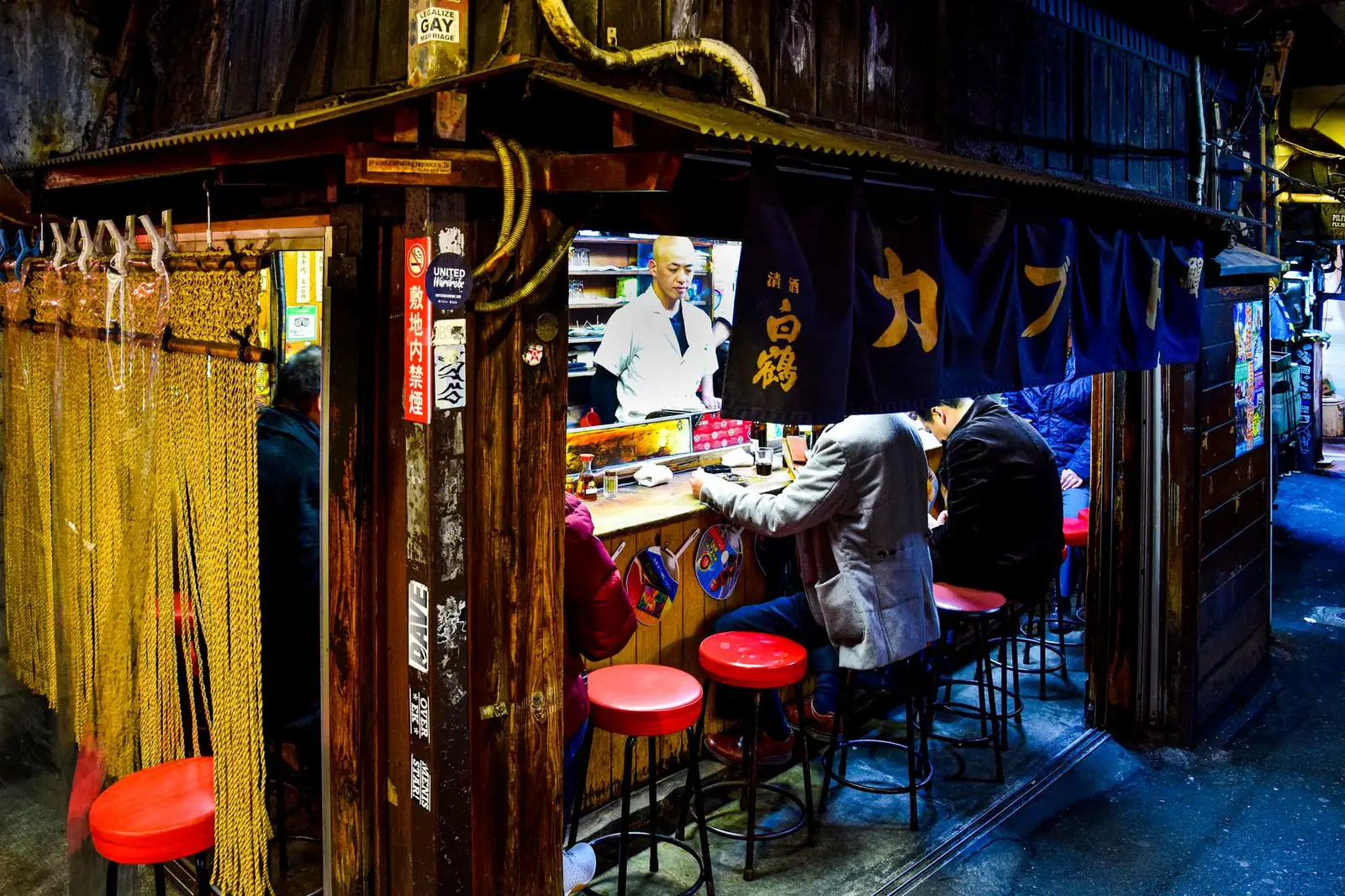

It's 6:47 PM on a Tuesday in Shinjuku, and the narrow alley behind the train station (the one called Omoide Yokocho, though locals often call it "Memory Lane") is already shoulder-to-shoulder. Salary workers in loosened ties crowd into three-seat counter bars, smoke drifting up into yellow lantern light, beer glasses already half-empty. Nobody looks like they're in a hurry to go home. Nobody looks like they're trying to impress anyone, either.
This is the izakaya world. And it works on its own logic.
What an Izakaya Actually Is
The word itself is old, "i" meaning to stay, "sakaya" meaning sake shop. The concept evolved during the Edo period (roughly 1603-1868), when sake merchants began letting customers drink on the premises instead of buying to take home. Over a few centuries, small plates got added, then more food, then the whole elaborate social ritual that exists today.
But defining an izakaya by its food or drink menu misses the point. It's better understood as a social format. A category of gathering. The food is almost secondary to the function the space performs.
In practical terms: an izakaya is a casual drinking establishment that serves food, often in small shared plates, meant for groups who want to settle in for a few hours. Think somewhere between a pub and a restaurant, but with its own specific rhythms that are neither.
The Japan National Tourism Organization describes izakayas as central to Japanese social life, but even that framing undersells it a little. For many working adults in Japan, the izakaya is where the actual conversation happens. The office version is managed, hierarchical, careful. The izakaya version is where things loosen.
The After-Work Framework: Understanding Nomi-kai
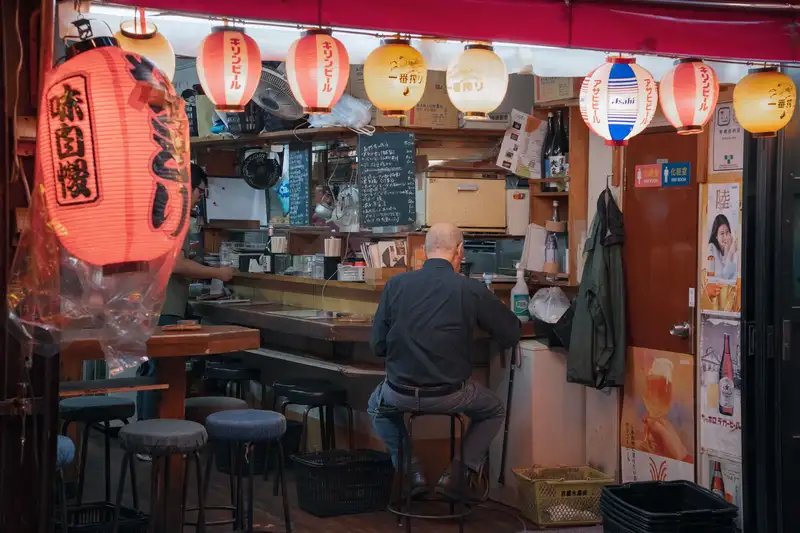
The word "nomi-kai" translates as "drinking gathering", "nomi" from "nomu" (to drink), "kai" meaning meeting or group. It sounds casual. It is casual. And yet it has structure.
Most nomi-kai happen within a company or work team context. A senior person or the team's social organizer (sometimes called a "kanji", the person who handles logistics) proposes a gathering. A date gets set. Everyone is expected to attend unless they have a compelling reason not to. Declining a nomi-kai without good cause is noticed, even if nothing is ever said directly about it.
This is one of the things visitors, and even long-term expats, tend to misread. The gathering looks voluntary. It is. But in Japanese workplace culture, showing up signals your relationship to the group. Absence does too.
The gathering typically starts within an hour of the end of the workday. People meet at the izakaya instead of traveling together. You arrive, you're seated, and almost immediately someone takes charge of the first drink order.
The First Pour: Kanpai and What It Signals
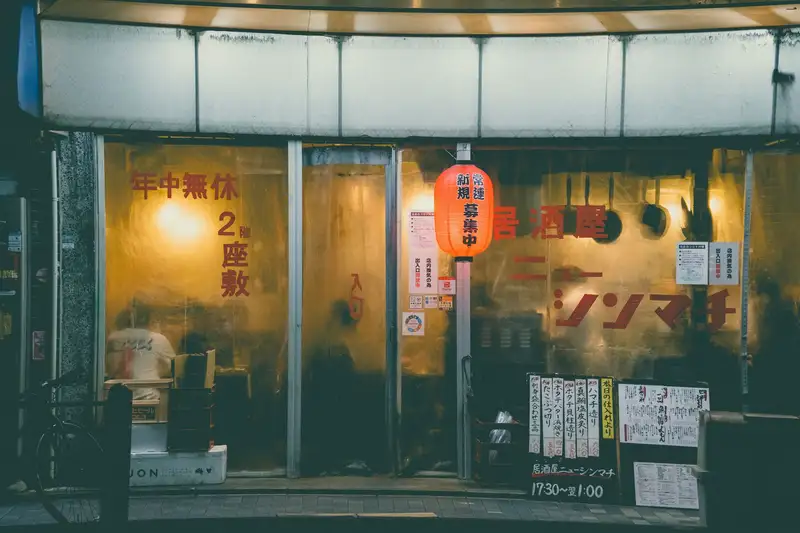
The opening moment of any nomi-kai is the kanpai, the toast. And it deserves attention, because it's not a formality.
Everyone orders a first drink (in Japan, this is almost universally beer, at least for the first round, "toriaezu biiru," meaning "beer for now," is practically a reflex). The drinks arrive. Someone (often the most senior person present, or the person who organized the event) says a few words. Then: kanpai.
You raise your glass. You drink.
What's happening here isn't social lubrication. The kanpai marks a transition. Before it, you're still technically in "work mode." After it, different rules apply. People who barely made eye contact in the office will be trading jokes within twenty minutes. The hierarchy doesn't disappear exactly, but it softens. A junior employee can tease a manager in ways that would be unthinkable at a desk.
One thing to know: when clinking glasses, you'll see younger or junior people lower their glass below the glass of the senior person they're clinking with. It's not universal, and it's not always practiced among close colleagues who know each other well. But it happens, and if you're the only foreigner at a table of Japanese colleagues, watching for it tells you how people are reading the room.
Ordering: The Logic of Shared Plates
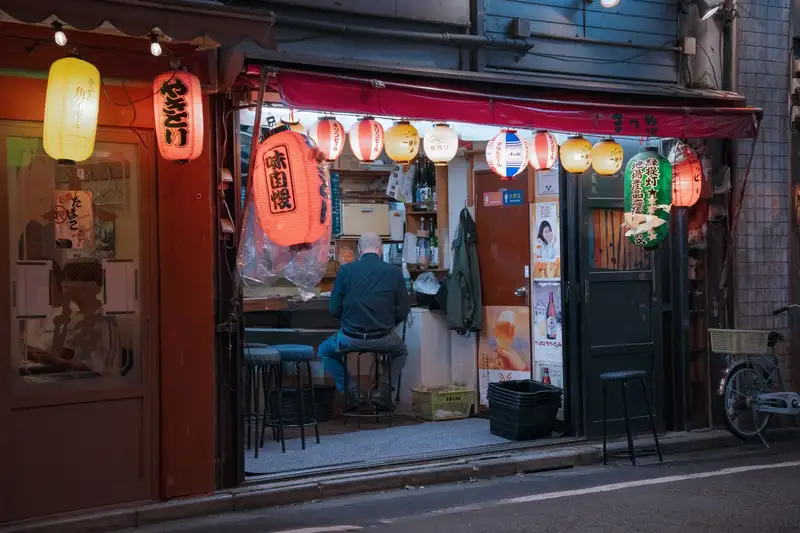
Izakaya menus are designed for sharing. Almost everything comes in portions meant for the table rather than for one person. Edamame, karaage (fried chicken), potato salad, sashimi, grilled skewers (yakitori), pickled vegetables, tofu dishes... the list of small plates is long and varies by region and establishment.
The ordering tends to happen in waves instead of all at once. An order arrives, gets picked at, then another follows. There's rarely a formal "starter, main, dessert" structure. The meal extends in the same way the conversation does, loosely, opportunistically, following the mood of the table.
It's also common for one person to order on behalf of the group, especially early in the evening. This is usually the person who knows the menu, the senior person, or whoever is feeling decisive. Pointing at the menu yourself and ordering individually isn't rude, exactly, but it reads differently; it signals you're more interested in your own preferences than in the shared experience.
Pouring drinks for others before yourself is default behavior. If you notice someone's glass is empty, you fill it. This is so normal that doing it without being asked is barely even noticed, but not doing it, when you're sitting right next to someone with an empty glass, can register as self-absorbed.
The Role of Alcohol (and the Option to Not Drink)
Japan has a strong drinking culture, and izakayas are built around it. But the picture is more complicated than "everyone drinks heavily." Many people drink moderately. Some don't drink at all.
The phrase "I don't drink", "osake wa nomimasen", is accepted without fuss in most izakaya contexts. What matters more is participation in the social ritual: showing up, ordering something (even a soft drink), joining in the kanpai with whatever you're holding. The drinking isn't the point. The gathering is.
That said, there's a specific concept worth knowing: "ikki," the practice of drinking a glass in one go when encouraged by the group. You'll hear it chanted ("iku, iku, iku!") usually in younger, more boisterous company. Nobody is obligated to comply. Declining with a laugh and a wave generally lands fine.
The bigger unspoken pressure is around pace. If everyone at the table is drinking and you're nursing the same soft drink for two hours while they've had four rounds, the social texture can get awkward, not hostile, a mild mismatch of energy. Ordering a second drink, even if it's non-alcoholic, tends to smooth this over.
Reading the Room: Tatemae, Honne, and What the Izakaya Is Actually For
Japan's social culture often gets described through the concepts of tatemae (the public face, the socially expected response) and honne (one's actual feelings or desires). In a formal work context, tatemae dominates almost completely. The izakaya is specifically designed to shift that balance.
It's not that people suddenly say everything they actually think. But the izakaya creates a kind of licensed looseness. Complaints about work that would never be voiced in the office get aired, obliquely. Frustrations about management get expressed through jokes. Ambitions, anxieties, personal lives, these surface in ways they wouldn't elsewhere.
There's even a social concept called "nominication", a portmanteau of "nomi" (drinking) and the English word "communication." The idea that drinking together builds understanding and trust. It sounds cynical when described that way, but the people who use the word usually mean it sincerely. You learn things about your colleagues at an izakaya that you'd never learn in a meeting room.
For visitors invited to a work nomi-kai (which does happen, particularly for people working in Japanese companies or doing extended business travel) this context matters. The gathering isn't purely social. It's doing real work in the relationship-building sense. Treating it as recreational, or leaving early without explanation, can inadvertently signal disengagement.
Practical Rhythms: The Niji-Kai (Second Party)
One detail that surprises many people: many nomi-kai don't end at the izakaya.
The niji-kai, "second party", is a follow-up gathering at a different venue, usually a bar, karaoke place, or smaller izakaya. Sometimes there's a san-ji-kai (third party). The evening extends in stages, each one a bit more informal than the last, the group usually getting smaller as people peel off at each transition.
Izakaya reservations in Japan often come with time limits, ninety minutes or two hours is common, especially in popular establishments or during peak evening hours. The niji-kai culture developed partly around this constraint. When the first place closes out your reservation, you move on rather than ending the night.
Whether you join the niji-kai is genuinely optional in a way the original gathering sometimes isn't. By the second party, the social obligation has been fulfilled. People who want to stay out do. People who need to get home do. Nobody really tracks who went where.
Regional Variation: Tokyo vs. Osaka vs. Everywhere Else
Izakaya culture isn't monolithic across Japan. Osaka tends toward louder, more communal tables, the standing izakaya (tachinomi-ya) culture is strong there, with people crowding around small counters in train station underpasses. Kyoto has its own quieter version, with older wooden buildings and a more reserved social energy. Tokyo has everything, from enormous chain izakayas in Shinjuku to tiny eight-seat spots in Shimokitazawa where the owner knows every regular by name.
The UNESCO Intangible Cultural Heritage framework has recognized washoku, Japanese culinary culture broadly, as an expression of social bonding, seasonal respect, and communal eating. The izakaya fits within that larger picture, even if "izakaya dining" isn't itself a designated category. The emphasis on shared plates, seasonal ingredients, and the act of eating together as relationship-maintenance runs through Japanese food culture at every level.
Rural izakayas have their own character entirely. Smaller, often family-run, with menus that change with what's available locally. The social dynamics tend to be looser; you might end up in a conversation with strangers more easily than in a packed urban establishment.
What Visitors Often Get Wrong
The most common misread is treating the izakaya primarily as a food experience. The food is often excellent (excellent, in the better spots) but coming in with a food-first mentality misses what makes the space tick. You eat at an izakaya the way you eat at a dinner party: the food matters, but it's not why you came.
Second common misread: the pace. Izakayas are not rushed. Ordering everything at once and trying to finish in an hour is technically possible, but it works against the rhythm of the place. The point is to linger. To let the conversation spread out across the evening. To order another round of edamame at 9:30 PM not because you're hungry but because it gives everyone something to do with their hands while someone tells a story.
Third: the bill. In Japan, it's common for one person to pay the entire bill and be reimbursed by the others later, or for the bill to be split evenly regardless of what each person ordered. Individually itemized bills are unusual and sometimes mildly inconvenient for staff to produce. If you're joining a group, assume you'll split evenly. If you're hosting, assume you might pay everything. It tends to balance out over time.
For people thinking about how to structure time in Japan more broadly, the question of DIY vs. guided experiences is genuinely relevant here, not because you need a guide to visit an izakaya, but because the social context of these spaces is genuinely hard to read without baseline understanding of how the evening is supposed to work.
The Language Barrier (and Why It Matters Less Than You'd Think)
Most izakayas in smaller cities or older neighborhoods don't have English menus. Some do, especially in tourist-heavy areas. This sounds more daunting than it is.
Pointing works. Asking the person next to you what they'd recommend, even with gestures, usually lands warmly. Izakaya staff are accustomed to navigating communication gaps, and the informal setting makes people more patient and playful about it than, say, a formal restaurant would be.
What helps more than language: a willingness to go slowly, to accept what arrives, to be visibly enjoying yourself. The social signal of someone who's relaxed and engaged cuts through language barriers more effectively than a translated menu.
The Deeper Function
I think what izakaya culture actually does, the thing that makes it worth understanding instead of just visiting, is create a socially sanctioned space for impermanence. Japanese work culture is often described as demanding, hierarchical, and emotionally contained. All of that is true. The izakaya is where some of that containment gets released, temporarily, within understood limits.
The evening ends. Everyone goes home. Tomorrow the hierarchy reconstitutes itself. The complaints aired over beer are not, technically, complaints. The close moment between a junior employee and their manager reverts to its proper distance. But something has shifted, in the texture of the relationship. That's the function. It's subtle and it's real.
Culture Discovery Vacations, which runs small-group cultural programs in Japan among other countries, has observed something similar in how their guests describe evenings at izakayas versus more formal dining experiences, the unstructured, communal, chaotic quality of the izakaya evening tends to be what people remember most vividly, often more than carefully arranged kaiseki meals or famous temples.
Try This
If you end up at an izakaya (alone, with a travel companion, or as a guest at a work gathering) try this one thing: resist the impulse to decide what you want before you sit down.
Let the first drink be whatever the table is having. Let the first food order happen organically, either by following what someone else orders or by pointing at something on the menu that looks interesting without overthinking it. For the first hour, follow the pace of the table instead of setting your own.
What you're doing is practicing the izakaya's actual logic: participation over preference. Being present in the room instead of managing your experience of it.
The food will be good. The beer will be cold. And at some point, probably around 8:30 or 9 PM, you'll notice that the conversation at the table next to you has gotten louder, someone is laughing harder than the joke probably warrants, and the evening has shifted into something that doesn't have a clean English translation.
That's the part worth staying for.

Comments (0)
No comments yet. Be the first!